How to create block library in AutoCAD 3 methods
In AutoCAD, block libraries are essentially collections of pre-drawn and reusable objects or symbols that you can insert into your AutoCAD drawings. AutoCAD…
In AutoCAD, block libraries are essentially collections of pre-drawn and reusable objects or symbols that you can insert into your AutoCAD drawings.
AutoCAD Blocks are commonly used elements like furniture, doors, windows, and various other design elements.
They make your life as an architect, engineer, designer, or drafter much more convenient.
So, whether you’re creating architectural plans, civil and structural drawings, mechanical drawings, or any other type, block libraries are an invaluable tool that helps you work smarter.
So, in this article I will be showing you three common ways to create block library in AutoCAD right from scratch.
Here is a video version of this article as well.
Preparing the drawings
So before making any block library, you have to collect all the blocks in one place.
That simply means you open the drawing that has the block in AutoCAD.
For this demonstration, I will be using the “Floor Plan Sample” drawing that usually comes with AutoCAD and you can find it here:
C:Program FilesAutodeskAutoCAD 2024SampleDatabase Connectivity
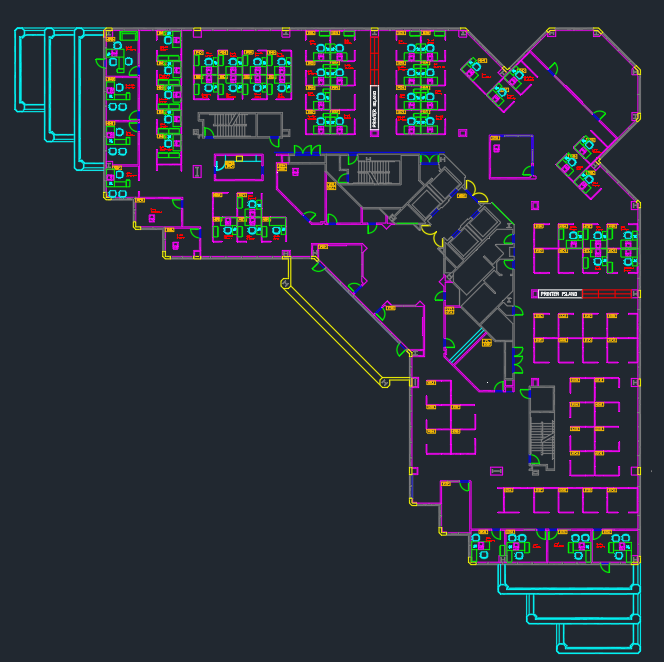
So the drawing already has blocks inside it and you can see these blocks by expanding the Insert Block panel as shown in the following image.
We will be using the existing blocks to create a library from it.
So, let’s start by exporting these blocks as external DWG files.
Exporting individual blocks
This method exports a single block at a time from the drawing as a global DWG file.
This simply means a single DWG file containing only the drawing of the block is exported.
You will save the exported blocks in a suitable location where you can easily access them, e.g. desktop, documents, etc.
For this case, I have created the “SourceCAD library” folder on my desktop, and inside the folder, I have created three sub folders.
I named these folder Doors and windows, Electrical and Furniture for easy categorization of blocks.
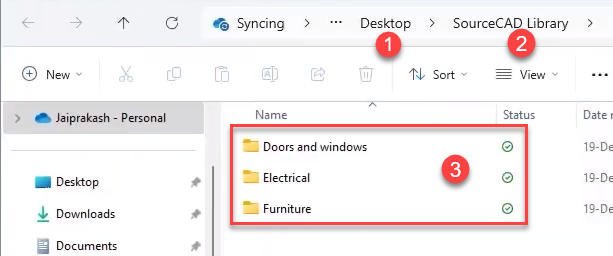
Inside these folders, we are going to save our blocks.
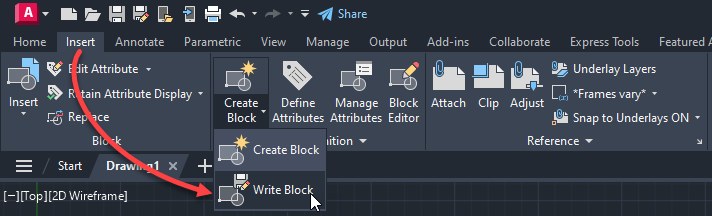
To do that, head back to AutoCAD, and under the “Insert” tab, in the “Block Definition” panel, click on the drop down menu and select “Write Block,” or type “WBLOCK” on your keyboard to access the same command.
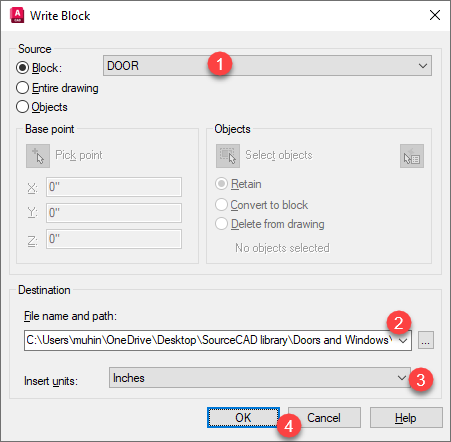
Under the Source option, select "Block,” and there will be a list of all the blocks in the drawing that you are working on.
Select the block that you want to export.
I will select "Door,” then specify the location that we want our block to be saved in the “Destination” option.
Then I will select the “Doors and Windows” folder in the “SourceCAD library” folder, then click on "Save.”
For the "Insert Units" option, you can opt to specify the units you are using or leave it as "Unitless.”
In this case, select “Inches” and then click on "Okay.”
Just like that!
The block is now saved as a DWG file in the folder, and now we have our first item in our library.
This method is okay when working on drawings with minimal blocks that need to be exported.
But, when working with several blocks, this method is quite slow as you need to repeat the same process for all the individual blocks.
The good thing is that these steps can be automated using AutoWblock AutoCAD plugin, as explained below.
Exporting multiple AutoCAD blocks
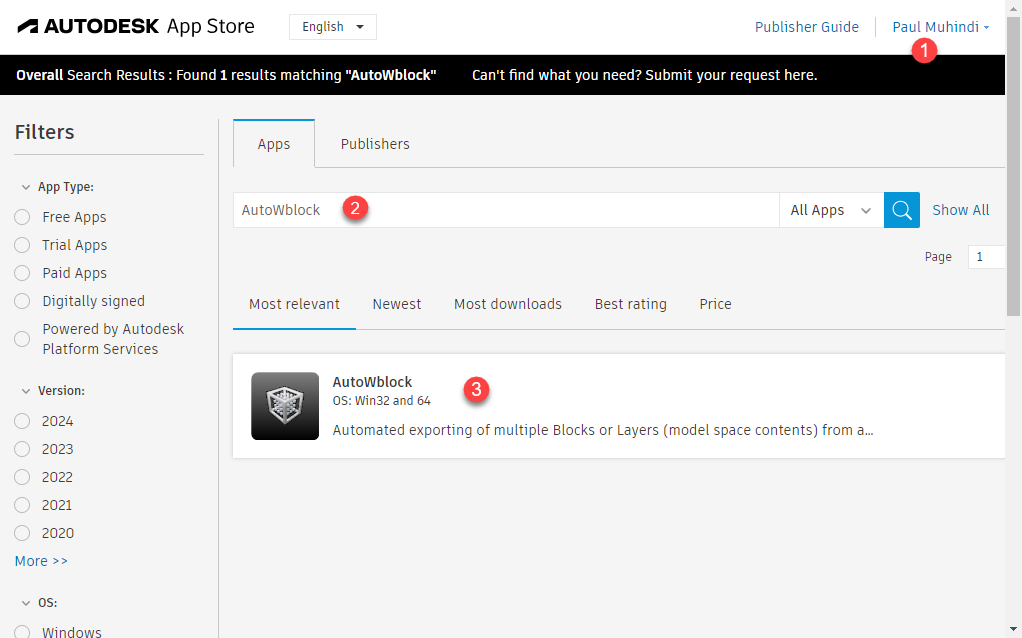
To get the plugin go to Autodesk App store and then search for AutoWblock and then download the plugin as shown below.
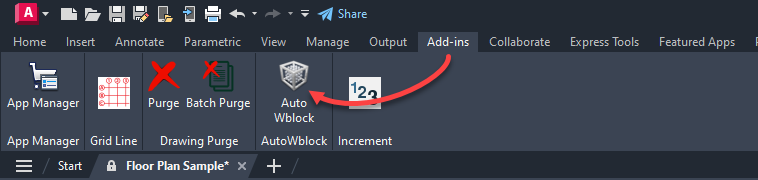
Install it and the plugin will show up in the add ins tab of AutoCAD.
Start the AutoWblock command by clicking the plugin icon on the add ins tab and a pop-up window will be shown listing all the blocks that you have in the current drawing.
Ensure you have selected “Blocks” on the drop-down list, then, if you want to export all the existing blocks in the drawing.
Then click on the “check” box highlighted by red marker 1 in the following image, and all the available blocks in the drawing will be selected.
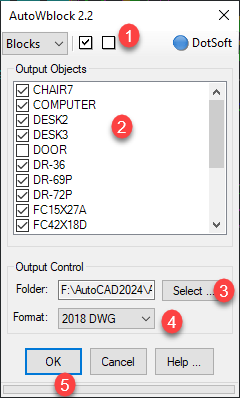
A display window showing the blocks in a list format will be shown where you can unselect some blocks that you do not want exported.
In our case, I unchecked “Door” because it was already exported.
Under “Output Control,” there are two options:
Folder: Use it to set the saving destination of your blocks.
You can only choose one location for all of your blocks to be saved in, for our example I am saving the blocks in Desktop > SourceCAD Library > Furniture
Format: Use it to downgrade the version of the exported drawing file to a suitable version that you would prefer.
Once you click on "OK,” all the selected blocks will be exported to the selected folder following the settings you have specified.
If you have several drawings, you can follow the same steps as explained above to export multiple blocks.
Now, we are done exporting blocks and collecting them in our selected folders its time we use them to create AutoCAD block library.
There are three main ways to create the block libraries:
1. Design Centre
2. Tool Palette
3. Block Library Palette
We will start with the Design Center method.
Creating block libraries using the Design Centre
You can access the Design Centre in AutoCAD by using “ADC” command or by using “Ctrl+2” keyboard shortcut.
Alternatively in the “View” tab, under the “Palette” tab, click on the “Design Centre” option to open it.

Once the command is active, the Design Center palette will pop up.
Click on the “Favorites” icon as shown below, and it will direct you to the view shown below.
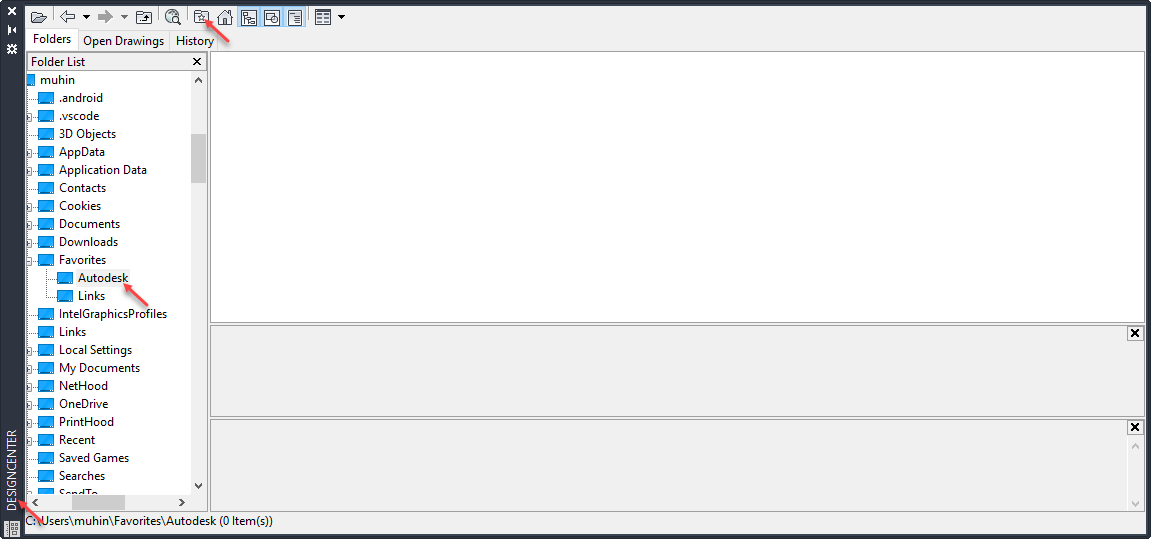
Inside the “Favourites” view, I will add the folder that contains the blocks that I have already created in the steps above.
This will help whenever I want to find my blocks in AutoCAD, I will simply activate Design Centre and click on my “Favourites” options.
So to add the folder that contains the blocks, simply right-click inside the Favourites view and select the “organize favourites” option from the contextual menu as shown in the following image.
It is going to open the location of the “Favourite” folder, then navigate to the desktop, and simply copy and paste the “SourceCAD library” folder that contains our blocks into the “Favourites” folder.
Inside the Design Centre, once I click on the favourites folder again to refresh, the folder our SourceCAD library folder will show up.
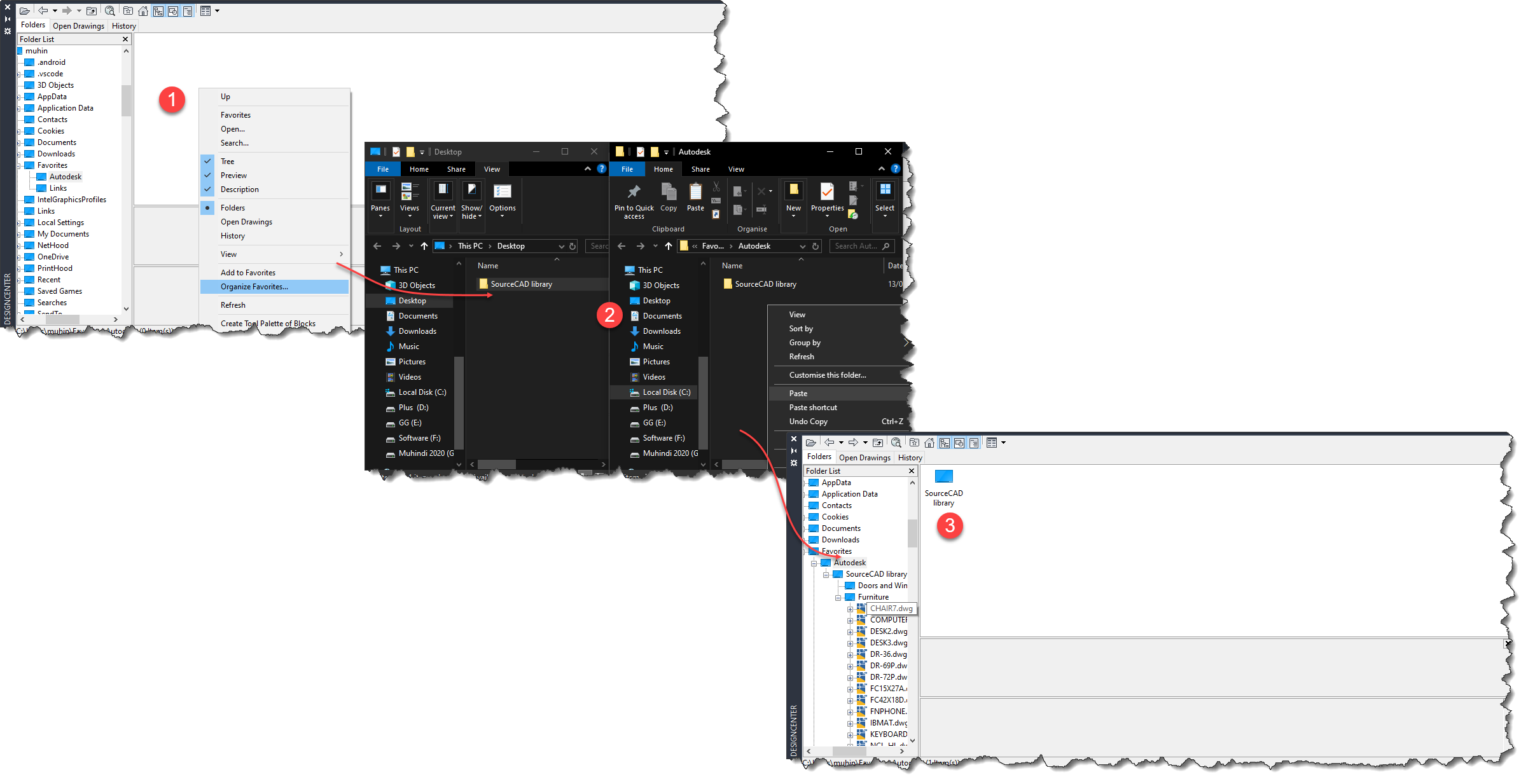
If I double-click "SourceCAD Library" folder, it will open to show the three folders that we had created.
Open Furniture folder and there you will find all our blocks.
To add the blocks to the drawing, simply drag and drop the block from palette to the drawing area and press enter three times to go through the X scale, Y scale, and rotation.

Creating block libraries using the Tool Palette
AutoCAD Tool Palette is another method of creating block library in AutoCAD.
With Design Centre open, navigate to the "Furniture" folder that we have inside the “SourceCAD library” folder.
Once you can see your various blocks, right-click near the blocks and select the “Create Tool Pallet of Blocks” option.
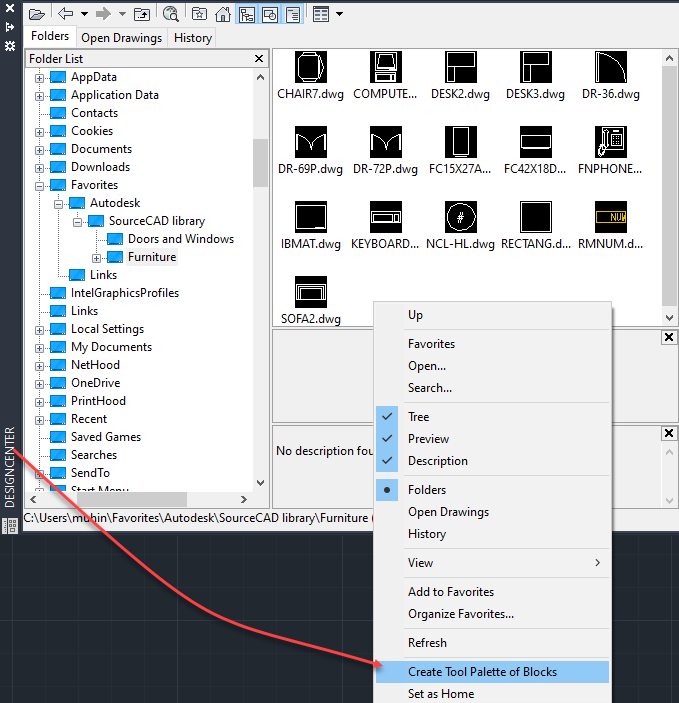
After selecting that, the tool palette window will pop up, and you will be able to see a new tab called “Furniture” added to the list.
The tab’s name is exactly the name of the folder that we have in the primary folder.
Now, even if we close the Design Centre completely, we will be left with the “Furniture” tab that has the full list of all the blocks in the folder, and we can still simply drag and drop our blocks.
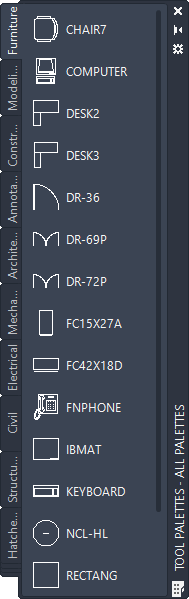
You can also rename or delete the “Furniture” tab by right-clicking the open tab and selecting the rename option.
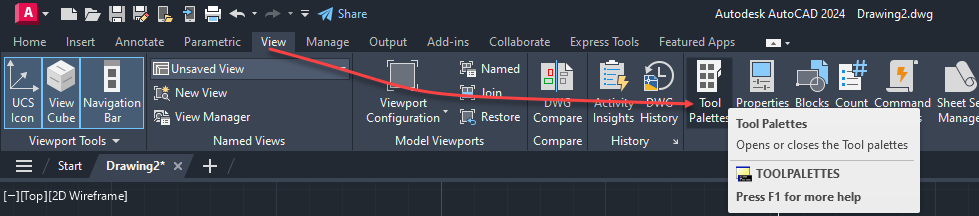
In the event you closed the tool palettes and you want to have it opened again, simply use “Ctrl+3” keyboard shortcut or use “TP” command.
Alternatively under the “View” tab and “Palette” panel, you can select the “Tool Palette” command as shown in the following image.
Creating block libraries using the Block library palette
So this tends to be the most obvious one, it's the “block library” option found within the “block panel” tab.
In the “Home” tab, under the “Block” panel, if you click on the drop menu under "Insert” flyout you will find the “Block from Libraries” option.
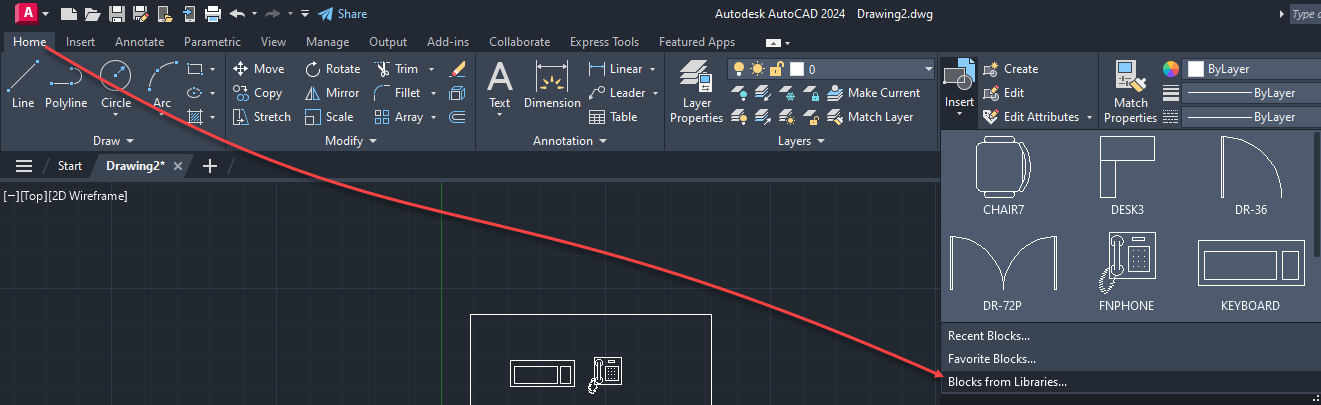
Once you select this option, the “blocks” window will pop up, which will have four tabs.
In our case, we are interested in the “Libraries” tab.
But, if it is your first time launching the command, you will have to select the folder that has the blocks as illustrated below.
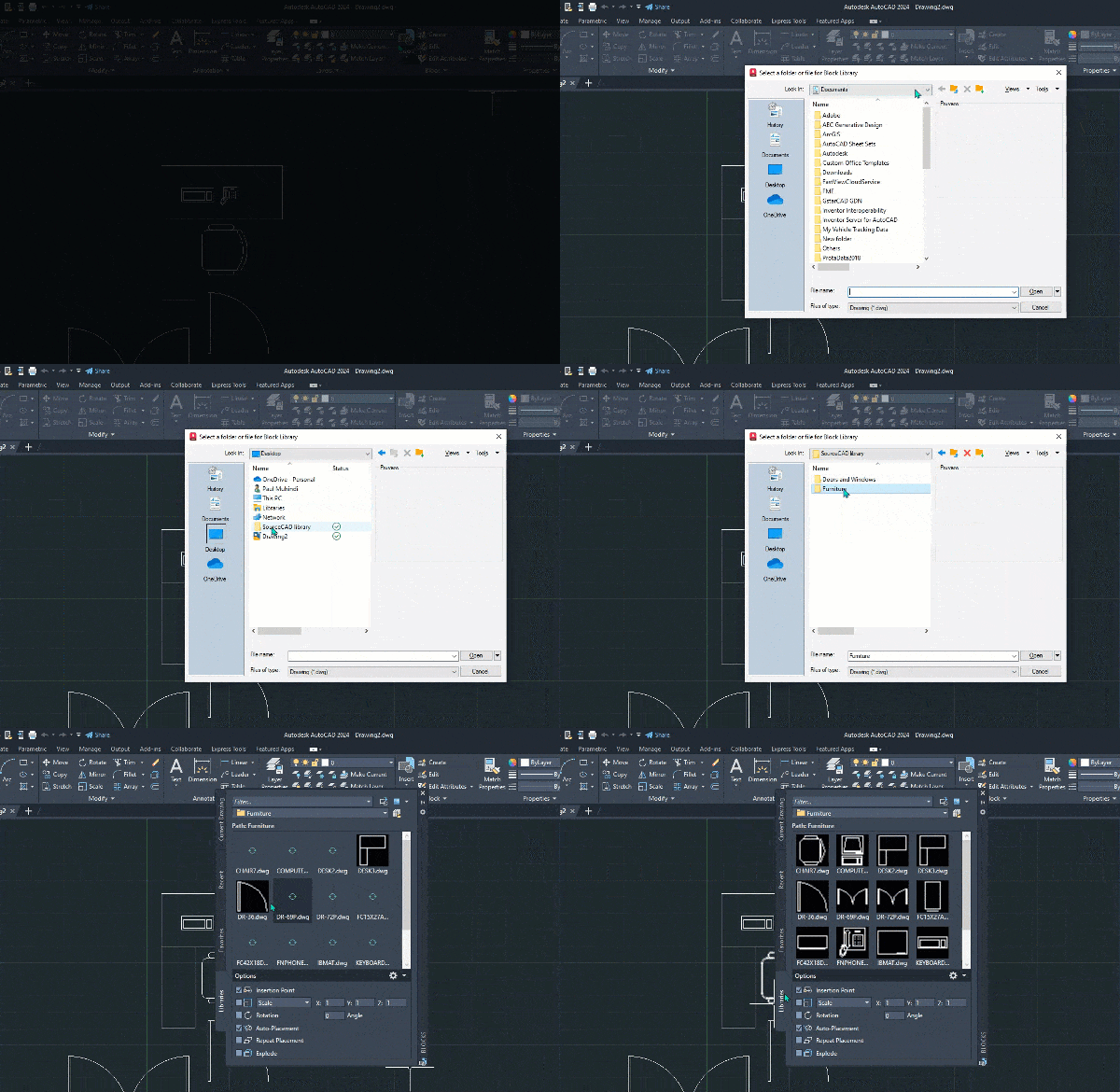
In the “Libraries” tab, go to the drop-down menu as shown below and click on the icon representing a stack of books highlighted by number 2 in the image.
A Windows Explorer window will pop up.
Navigate to where you have your folder of interest with DWGs saved.
In my case, it is on the Desktop > SourceCAD Library > Furniture.
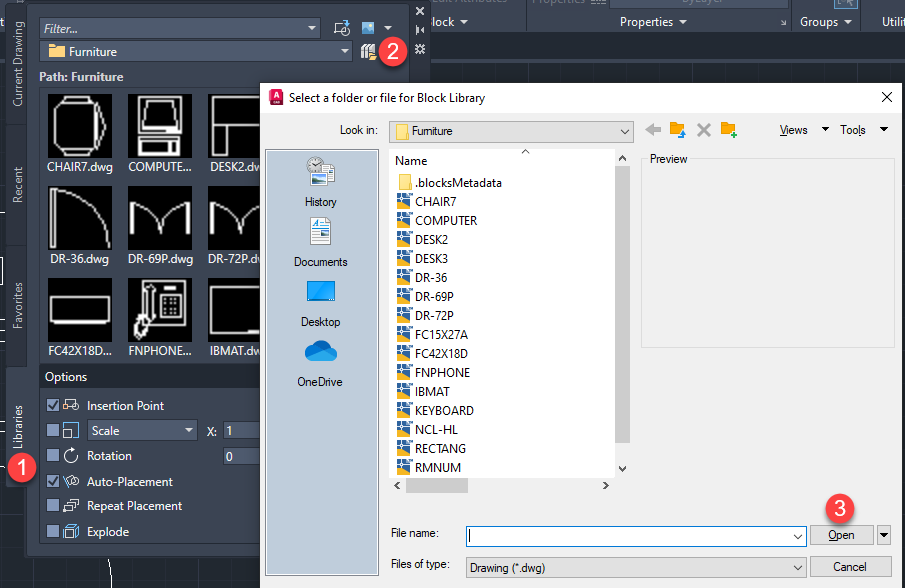
Once you click on "Open” it's going to show all the existing blocks in the specified folder, in this case, furniture, inside libraries palette.
If you want to add any of these blocks to your drawing, simply select the specific block and drag and drop it into the drawing.
Some Notes
Before we wrap it up there are some points that you need to keep in mind about block libraries.
These blocks that are now added to the libraries within AutoCAD are available for all the drawings that you will be working on.
All three methods of creating the block libraries are dependent on the location of the folder that contains the blocks in DWG file format.
If you rename or delete the parent folder, in this case, “SourceCAD library,” none of the blocks are going to work.
You need to ensure that the parent folder is safe by saving it in a secure place.
You can save it on a network drive if you have one, or use Autodesk's location within your computer.
Here is a simple method to find the Autodesk secure folder.
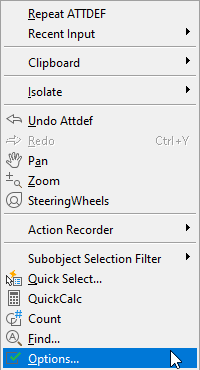
Inside AutoCAD, on a new drawing, right-click anywhere within your workspace and click on "Options.”
Under options, click on the first tab, "files,” and with the first item, you will see the “Support Files Search Path” directory.
You can expand it, and you will see some already existing support locations.
You can simply use the existing locations to save your block library there.
I would recommend saving it under “C:Program FilesAutodeskAutoCAD 2024 Support” as highlighted in the following image.
Depending on your AutoCAD version, the year for AutoCAD in file path will change.
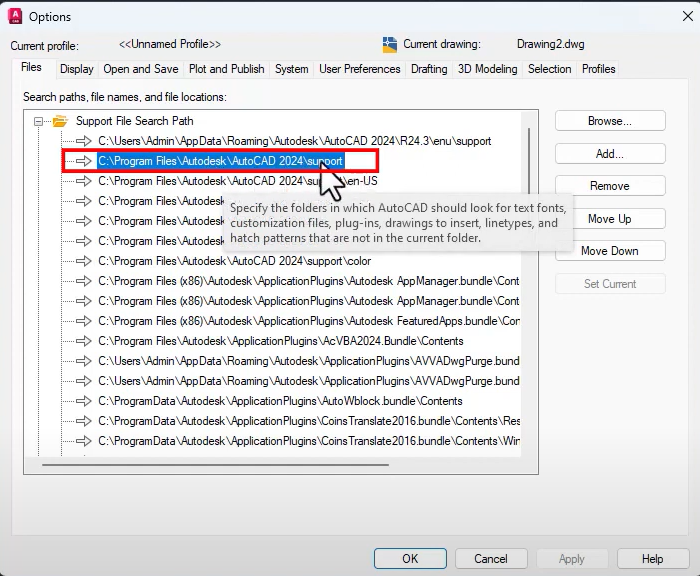
Click on the "Browse...” option on your right-hand side within the “Options” window, and in that Windows Explorer folder, simply paste the block(s) library folder(s) that you have.
The folder is immune to any system changes; only when you uninstall AutoCAD will the library be lost.
Once you have your folder saved in that location, the steps for adding the libraries in AutoCAD will remain the same, either by using the Design Centre, Tool Palettes, or Block libraries.
Frequently asked questions
Finally let's answer some of the questions that you've asked quite frequently.
Is there a block library in AutoCAD?
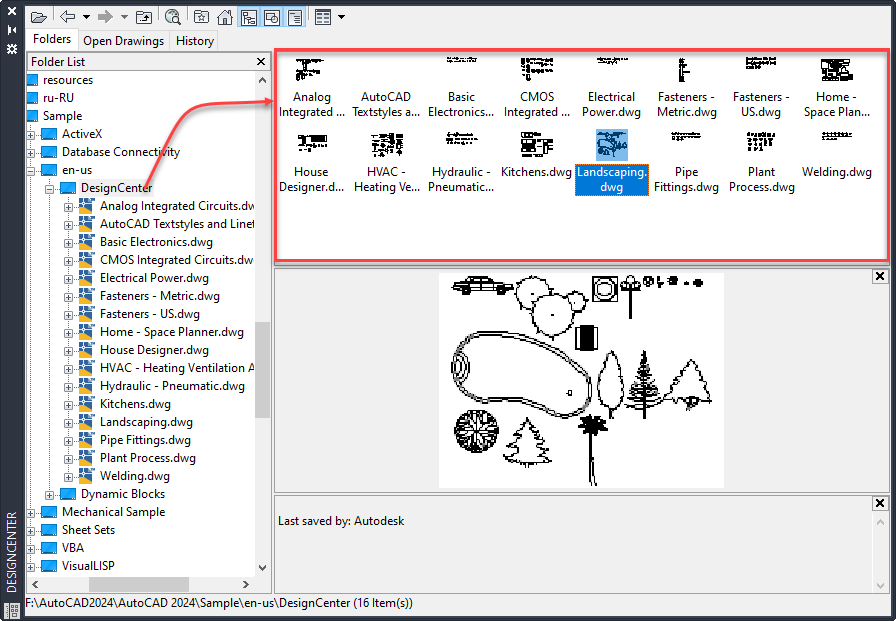
Absolutely! AutoCAD has a library called Design Center for simple blocks and another called Tool Palette for dynamic blocks.
To open up Design Center, you can use ADC command and for Tool Palette you can use TP command.
Following image shows a glimpse of Design center block library.
Can you download AutoCAD block libraries?
Yes, you can! Getting your hands on AutoCAD block libraries is a breeze.
There are several websites from where you can download AutoCAD blocks for free.
After downloading you can collect them in a folder to create your own library.
Just a heads up – always check the rules about using these blocks, you want to make sure you're on the right side of licensing.
And of course, be sure you trust the source before bringing those blocks into your designs.
Can AutoCAD LT create a block library?
Yes, despite its limitations it can still create block libraries!
So, in AutoCAD LT, you might not have all the bells and whistles like the full AutoCAD, but creating a block library is still doable.
While AutoCAD LT lacks the Design Center feature, you can create your library by putting blocks in folders as explained in this article and also by using the libraries function of Blocks Palette.
Summary
So, these were all the methods using which you can create block library in AutoCAD.
If you want to learn all about making simple blocks right from scratch including libraries then it is all explained in the AutoCAD beginners course in a step by step way.
You can also learn about making Dynamic blocks and it's libraries in the AutoCAD dynamic block course.
Finally if you have questions simply let us know in the comments down below.