SolidWorks vs Fusion 360 which one should you learn
If you ve spent your time in CAD forums or Reddit threads wondering about which of the software between SolidWorks or Fusion 360 you should learn, it s a rabbit hole down there. Solidworks users will say Use Solidworks. Fusion users will say Use Fusion. The people who use both usually say It depends on your [ ]
If you’ve spent your time in CAD forums or Reddit threads wondering about which of the software between SolidWorks or Fusion 360 you should learn, it’s a rabbit hole down there.
Solidworks users will say “Use Solidworks.”
Fusion users will say “Use Fusion.”
The people who use both usually say “
It depends on your work needs.”
And technically they are not wrong.
It does depend.
But that answer isn’t very helpful when you are staring at two programs and trying to decide where to put your time.
Especially as a designer in need or a beginner in confusion
In this article we break down where each program actually shines, where it falls short, and which one makes the most sense for you.
We teach both SolidWorks and Fusion 360 at SourceCAD, so there’s no agenda here.
Just an honest look at how the two compare.
A Quick Look at Both Programs
Here’s a quick reference to see how they stack up across key areas.
Feature | SolidWorks | Fusion 360 |
Part modeling | Advanced parametric, extensive feature set | Parametric + direct + sculpt modeling |
Assemblies | Excellent at scale, robust mate system | Works for small-to-medium, struggles at scale |
2D drawings | Professional-grade with full GD&T | Basic, still improving |
Simulation/FEA | Advanced (linear, non-linear, thermal, fatigue) | Basic FEA and thermal |
CAM/CNC | Separate add-on (CAMWorks) | Built-in, 3-axis to 5-axis |
Sheet metal | Mature tools with bend tables, cut lists | Available but less developed |
Rendering | PhotoView 360, Visualize (add-on) | Built-in cloud rendering |
Collaboration | PDM/PLM (requires setup) | Cloud-based, built in |
PCB design | Available via SOLIDWORKS PCB (add-on) | Integrated (Eagle-based) |
Platform | Windows only | Windows and Mac |
File storage | Local (with optional cloud via 3DExperience) | Cloud-based (limited offline) |
Personal license | Makers ~$48/year, Student ~$60/year | Free (non-commercial, <$1K revenue) |
Commercial license | ~$3,000–4,000+/year | ~$680/year |
Where SolidWorks Has the Edge
Assemblies and large designs
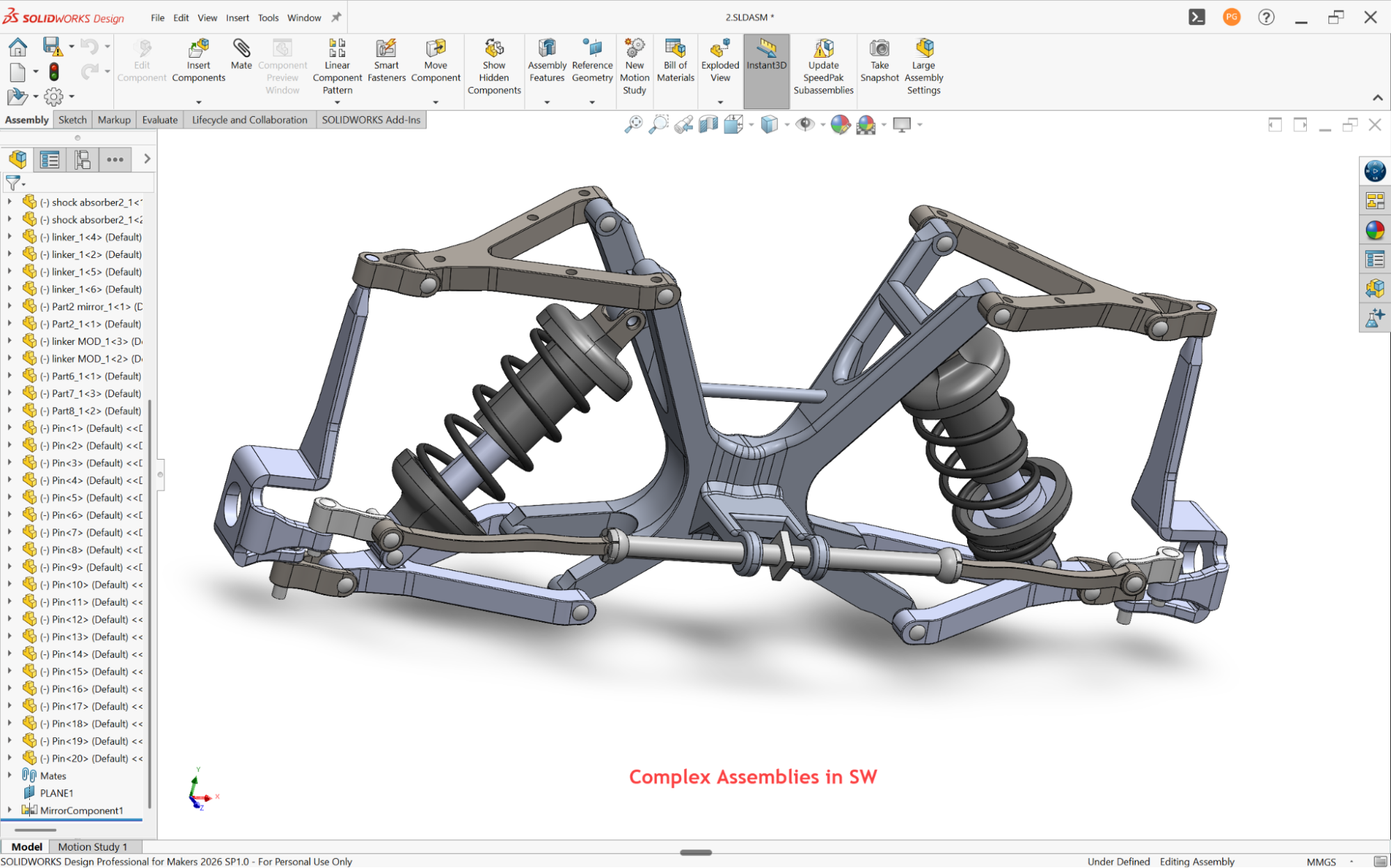
This is probably the most consistent feedback we have heard from people who used both the programs and even from our experience.
SOLIDWORKS handles large assemblies much more reliably than Fusion.
The feature tree stays organized, mates behave predictably, and the software doesn’t choke when things get complex.
Fusion’s timeline-based approach works fine for simpler projects, but it can get messy and hard to manage as part counts go up.
Mates vs. joints
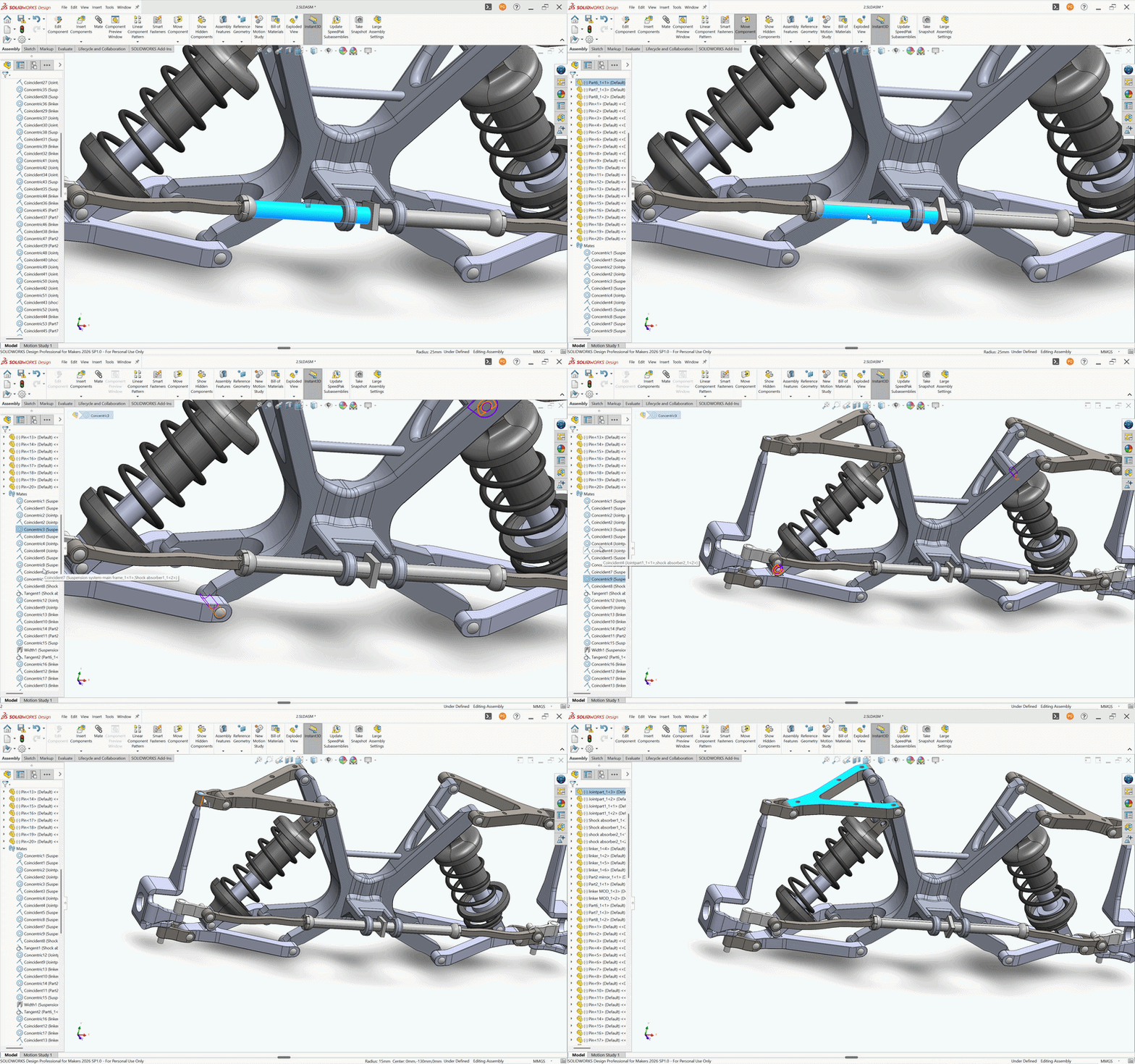
SolidWorks uses a mate system for constraining parts in an assembly.
Fusion uses joints, which work differently.
Almost every forum thread on this topic while we were researching has had at least one person saying Fusion Joint System frustrated them.
It’s gotten better in recent updates (Autodesk added a mate-style option), but SolidWorks mates are still considered more intuitive by most users who have tried both.
2D drawings and documentation
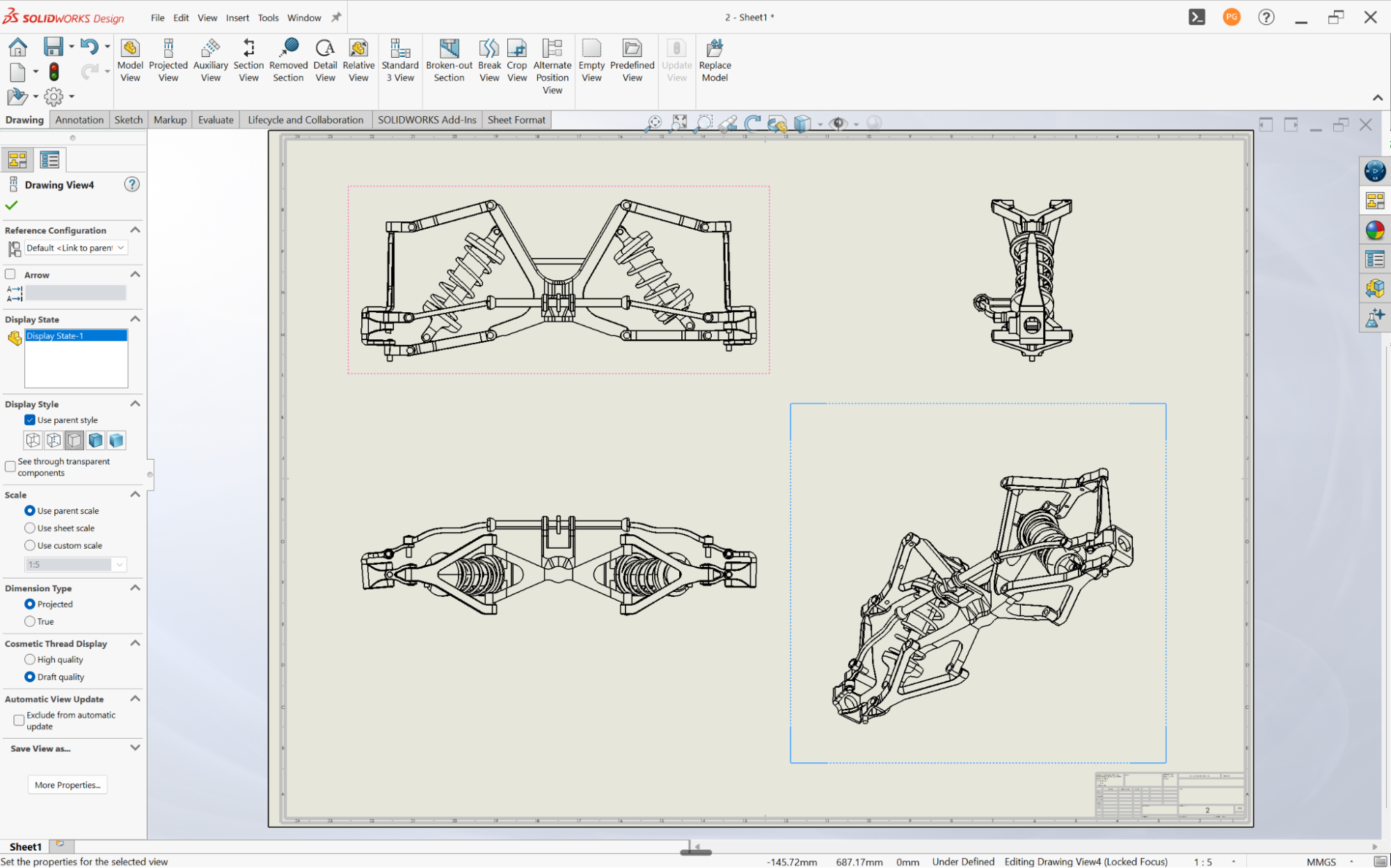
If your workflow ends with a manufacturing drawing that goes to a machine shop, SolidWorks is significantly ahead.
Its drawing tools are mature, detailed, and capable of producing professional-grade documentation with proper GD&T, balloon callouts, bill of materials, and revision tables.
Fusion’s drawing tools exist, but they’re limited and still catching up.
It’s relatively good but not as polished as Solidworks’.
Simulation and analysis
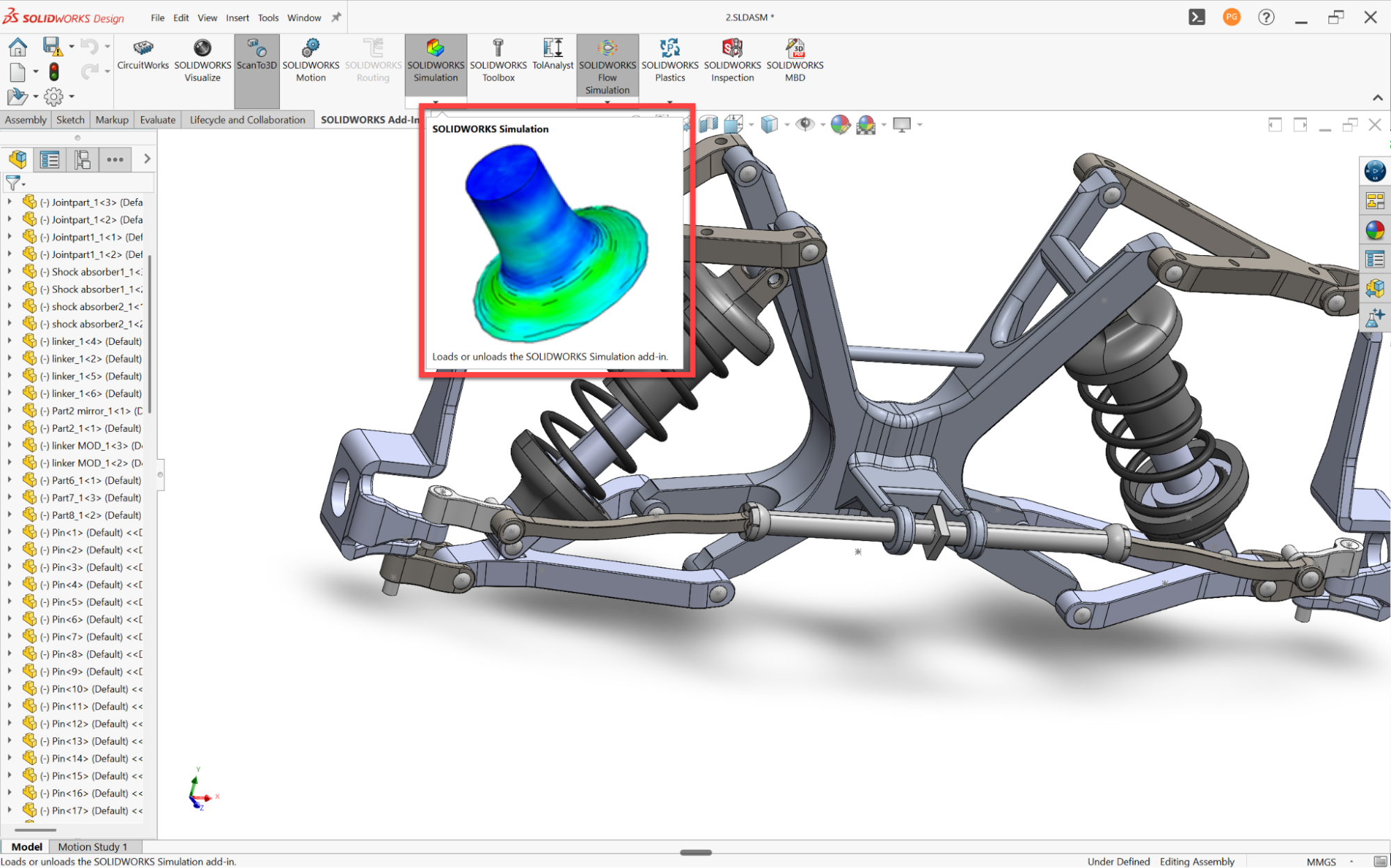
SolidWorks offers more advanced simulation capabilities: linear and non-linear FEA, thermal analysis, fatigue studies, motion analysis.
Fusion has simulation tools too, but they’re more basic.
For serious engineering validation, SolidWorks gives you more depth.
Sheet metal and weldments
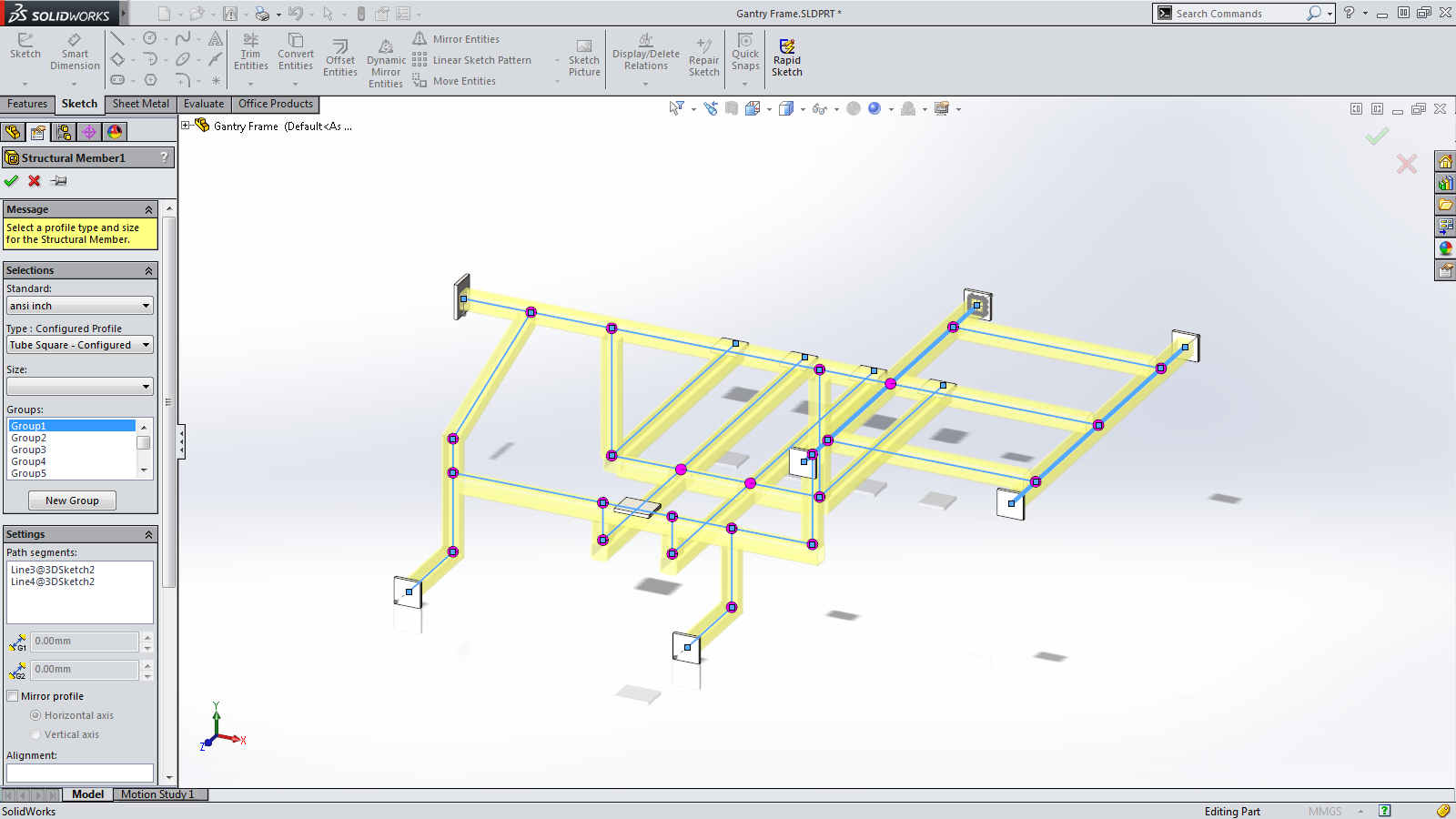
SolidWorks has mature sheet metal tools with bend tables, flat pattern generation, and K-factor control.
Its weldments feature, with structural member profiles and automatic cut lists, is something Fusion doesn’t match.
If you’re in a fab shop doing weldments, structural steel, or sheet metal, SolidWorks is the stronger choice.
Job market and industry adoption
SolidWorks is still the most widely used midrange CAD in professional engineering.
If you look at job postings for mechanical design or product engineering roles, SolidWorks appears far more often than Fusion 360.
The skills also transfer well to other professional tools like Inventor, Creo, and NX.
Learning SolidWorks gives you a foundation that works across most of the industry.
Where Fusion 360 Has the Edge
Price
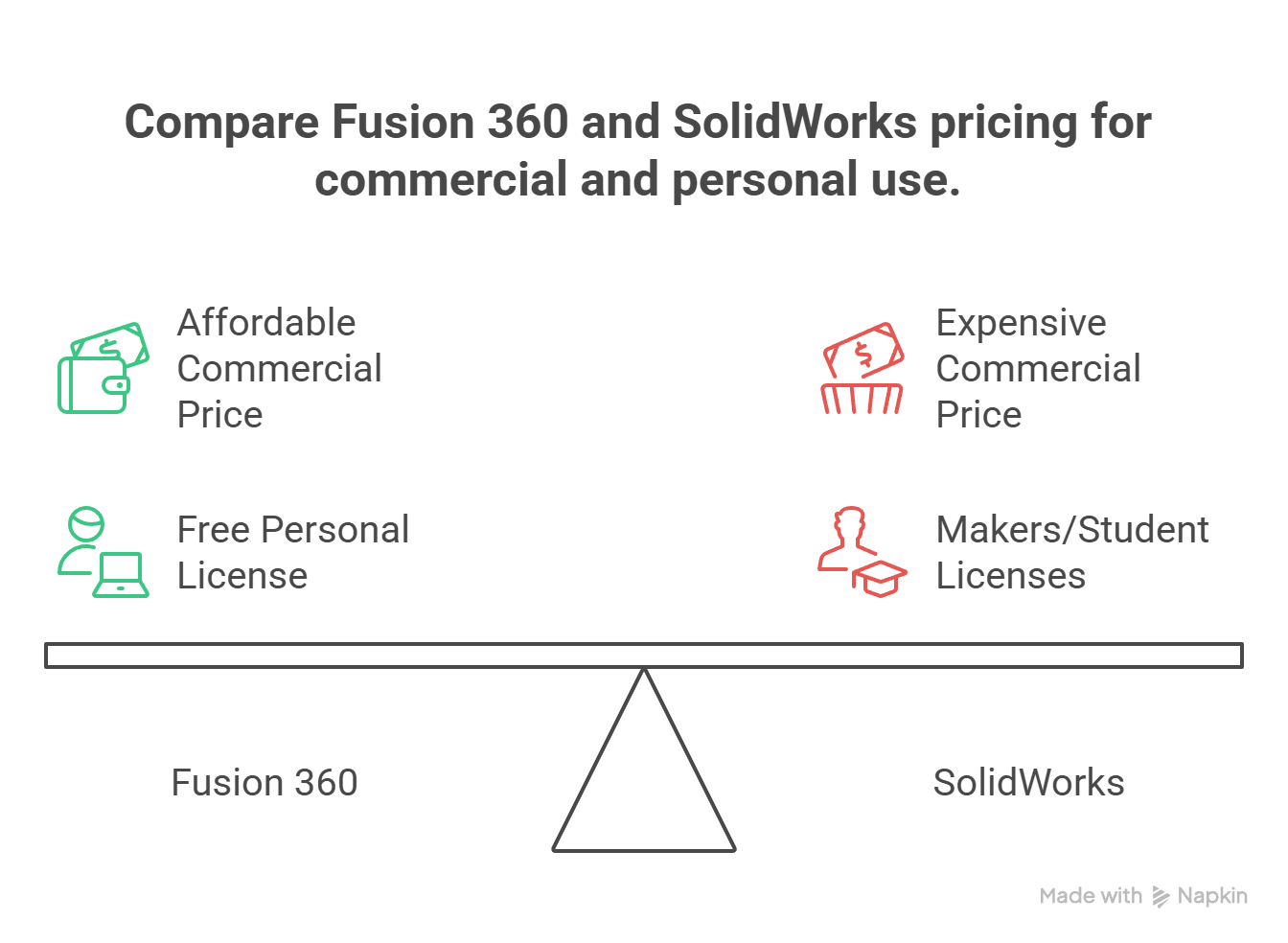
This is one of Fusion 360’s biggest upticks.
Fusion 360 has a free personal license for non-commercial use.
If you’re exploring other no-cost options as well, there are several free CAD programs worth considering.
The commercial subscription runs around $680 per year.
SolidWorks commercial licenses start around $3,000 to $4,000 per year.
SolidWorks does offer a Makers edition through the 3DExperience platform for about $48 per year, and student licenses are available for around $60 per year.
These narrow the gap significantly for personal use, but the commercial pricing difference is still massive.
Built-in CAM
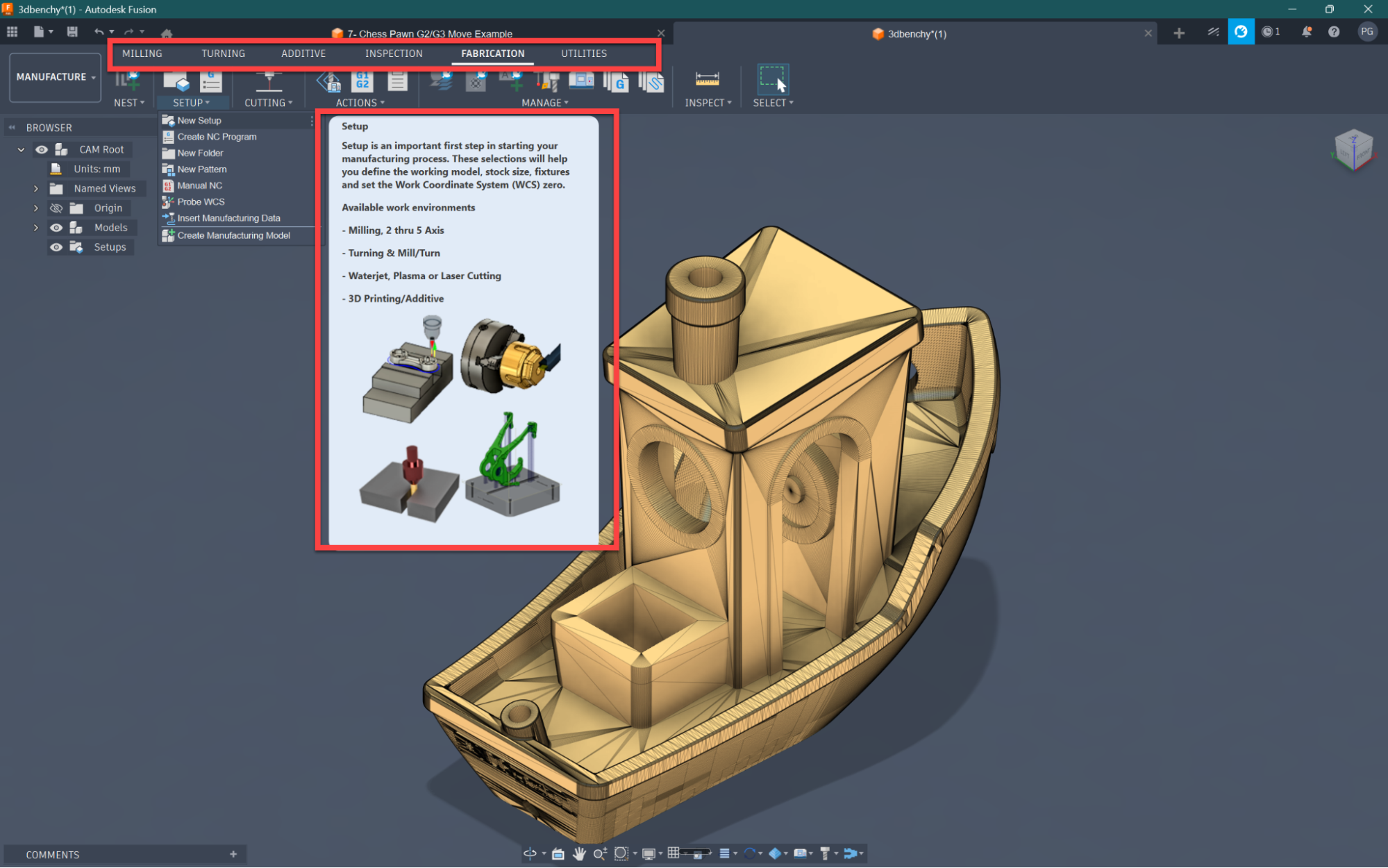
The base subscription includes 3-axis to 5-axis CNC toolpath generation.
You can design a part, generate toolpaths, simulate the machining process, and export G-code, all in one environment.
SolidWorks has CAMWorks, but it’s a separate add-on with its own cost.
A lot of shops run SolidWorks for design and Fusion for CAM, and that’s a pretty common setup.
Cloud-based collaboration

Fusion stores everything in the cloud by default.
Your team can access the same files from anywhere, and version history is automatic.
SolidWorks can do collaboration through PDM (Product Data Management), but setting it up takes more effort and infrastructure.
For small teams or distributed groups, Fusion’s built-in cloud approach is simpler.
Mac support
Fusion runs natively on Mac and Windows.
SolidWorks is Windows-only.
If you’re on a Mac, you’d need Boot Camp, Parallels, or a virtual machine to run SolidWorks, and that comes with its own set of headaches.
Mesh and organic modeling
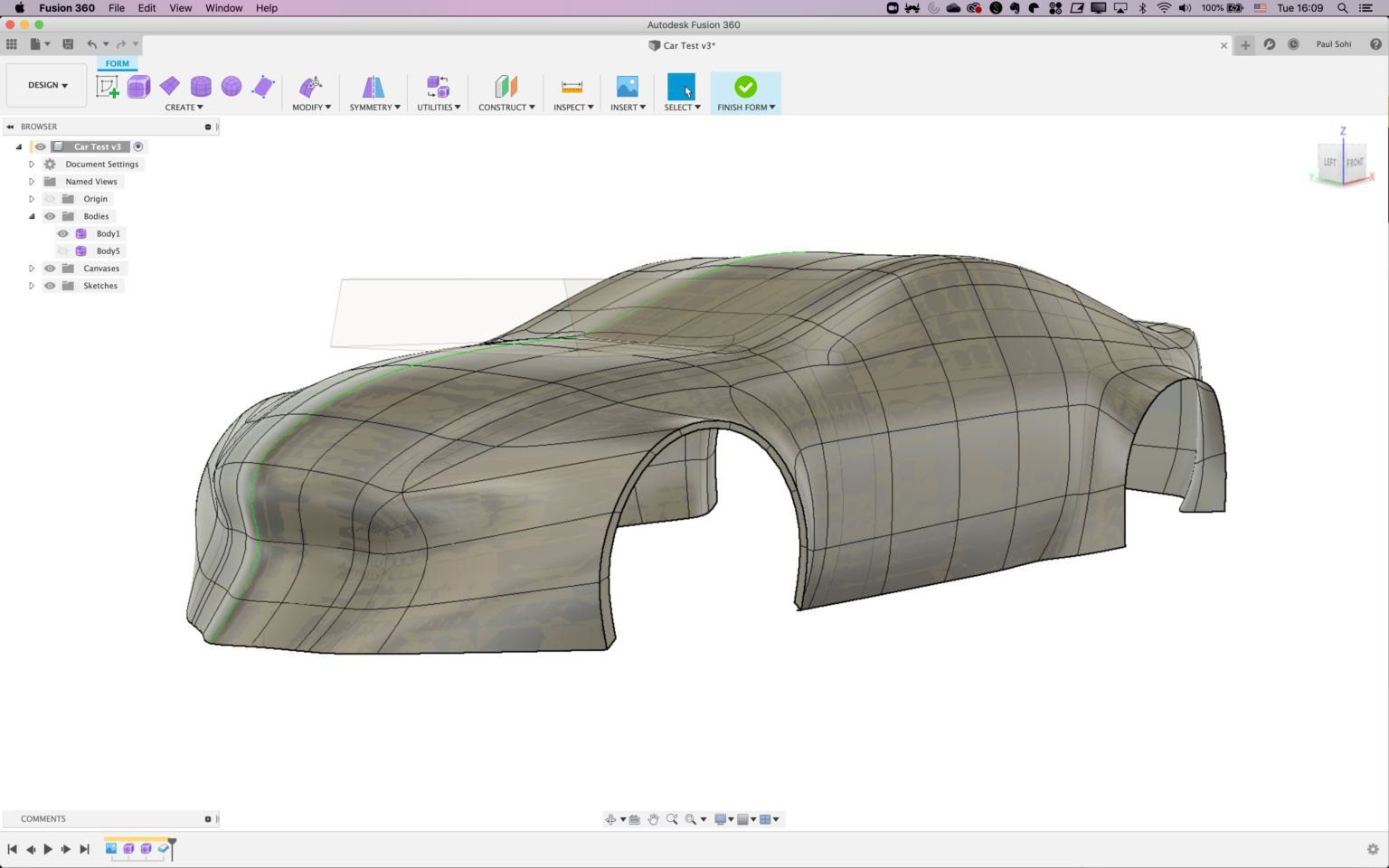
Pooria Sohi via Autodesk Fusion 360 Bloghttps://www.autodesk.com/products/fusion-360/blog/from-solids-to-organics-when-and-how-to-use-solids-surfaces-and-t-splines/
Fusion’s sculpt (form) environment lets you create freeform organic shapes using T-spline surfaces.
It also has much better mesh-to-solid conversion.
If you’re working with 3D scans or downloaded STL files, Fusion handles that workflow significantly better than SolidWorks.
Lower hardware requirements
Because Fusion offloads some processing to the cloud, it runs reasonably well on less powerful machines.
SolidWorks performs best on a dedicated workstation with a professional-grade GPU and plenty of RAM.
Electronics and PCB design
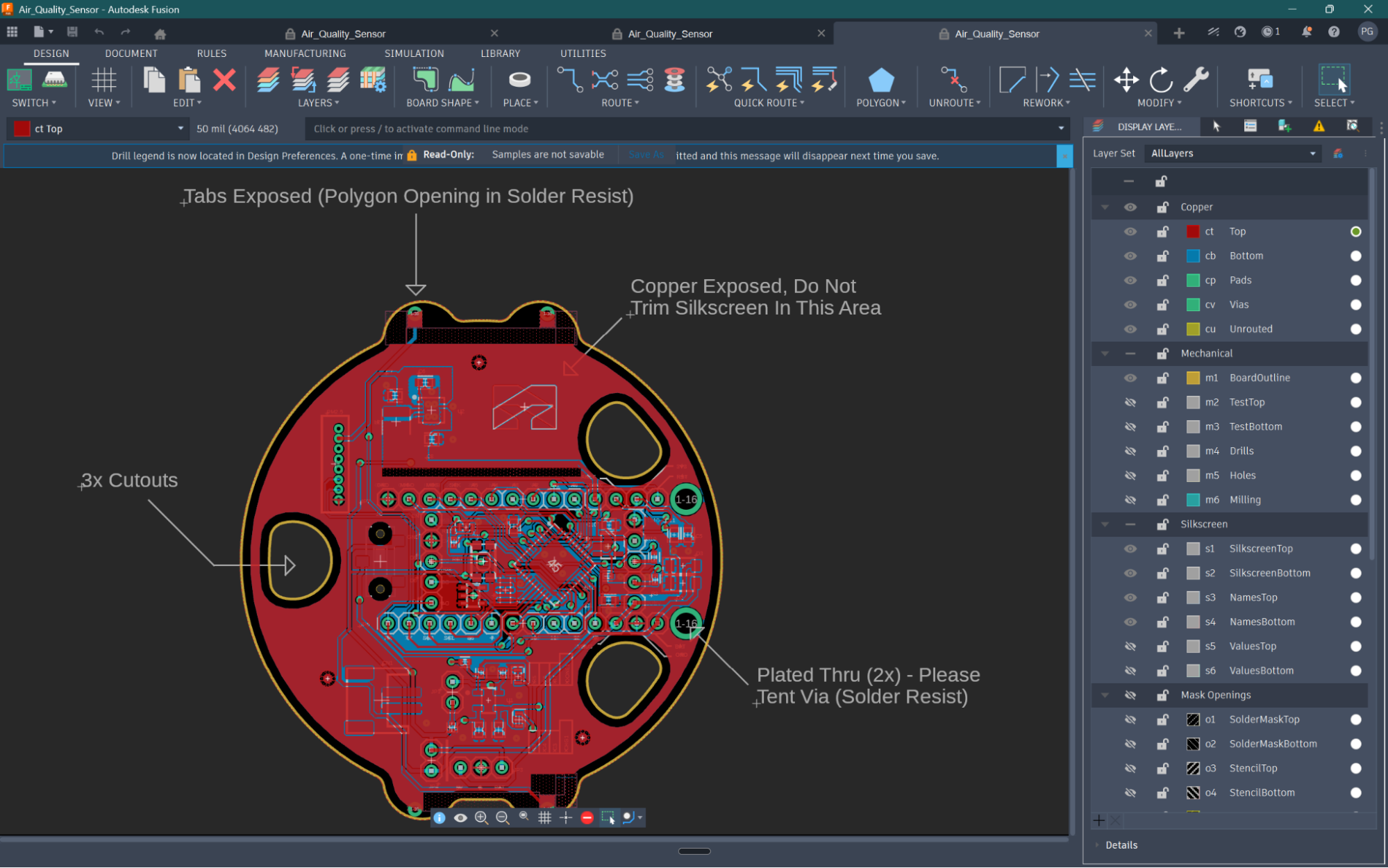
Fusion includes an integrated PCB design workspace (based on Autodesk Eagle).
If you’re developing products that combine mechanical and electronic components (IoT devices, consumer electronics, custom controllers), having PCB design in the same environment is genuinely useful.
Learning curve
Fusion’s interface is cleaner and less intimidating for beginners.
There are also more free tutorials available online, especially for hobbyist and 3D printing workflows.
You can get productive faster in Fusion, particularly if you’re coming in with no prior CAD experience.
If you’re leaning toward Fusion, it helps to have the right hardware.
Here’s a list of laptops that work well with Fusion 360.
The Honest Downsides
Here’s what actually frustrates most of the people about each program.
This is based on what we have heard from real users and our own experiences.
SolidWorks:
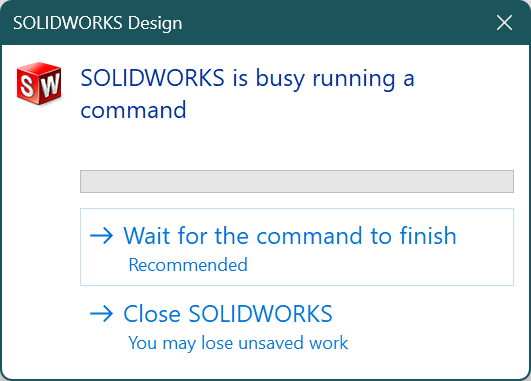
The cost is hard to justify for anyone who isn’t using it professionally.
Even the Makers edition requires going through the 3DExperience portal, which is widely criticized for being slow and unintuitive.
SolidWorks crashes are a common complaint, too when you load in many add-ons.
The software is Windows-only with no official Mac support.
And while Dassault Systèmes keeps pushing 3DExperience as its cloud platform, not everyone is in favor of the cloud.
Many feel the software is showing its age in terms of UI modernization and cloud capabilities.
Fusion 360:
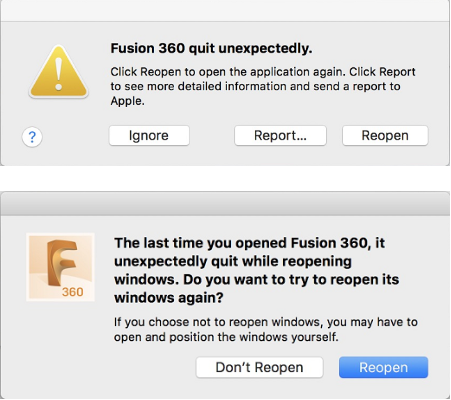
https://www.autodesk.com/support/technical/article/caas/sfdcarticles/sfdcarticles/Fusion-360-crashes-when-opening-specific-file.html
Assemblies get painful at scale.
The timeline becomes hard to navigate with complex models, and the software can feel sluggish once you’re working with many components.
Cloud dependency means you need a reliable internet connection to work efficiently.
File management through the cloud can feel slow compared to working with local files.
Fusion’s drawing and documentation tools are still limited compared to SolidWorks.
If you need professional manufacturing drawings, you’ll feel the gap.
Autodesk also has a track record of changing licensing terms.
The free personal license used to be more generous, and restrictions have tightened over the years.
Stability is another sore point. Crashes and bugs come up frequently in user forums.
Which One Should You Choose?
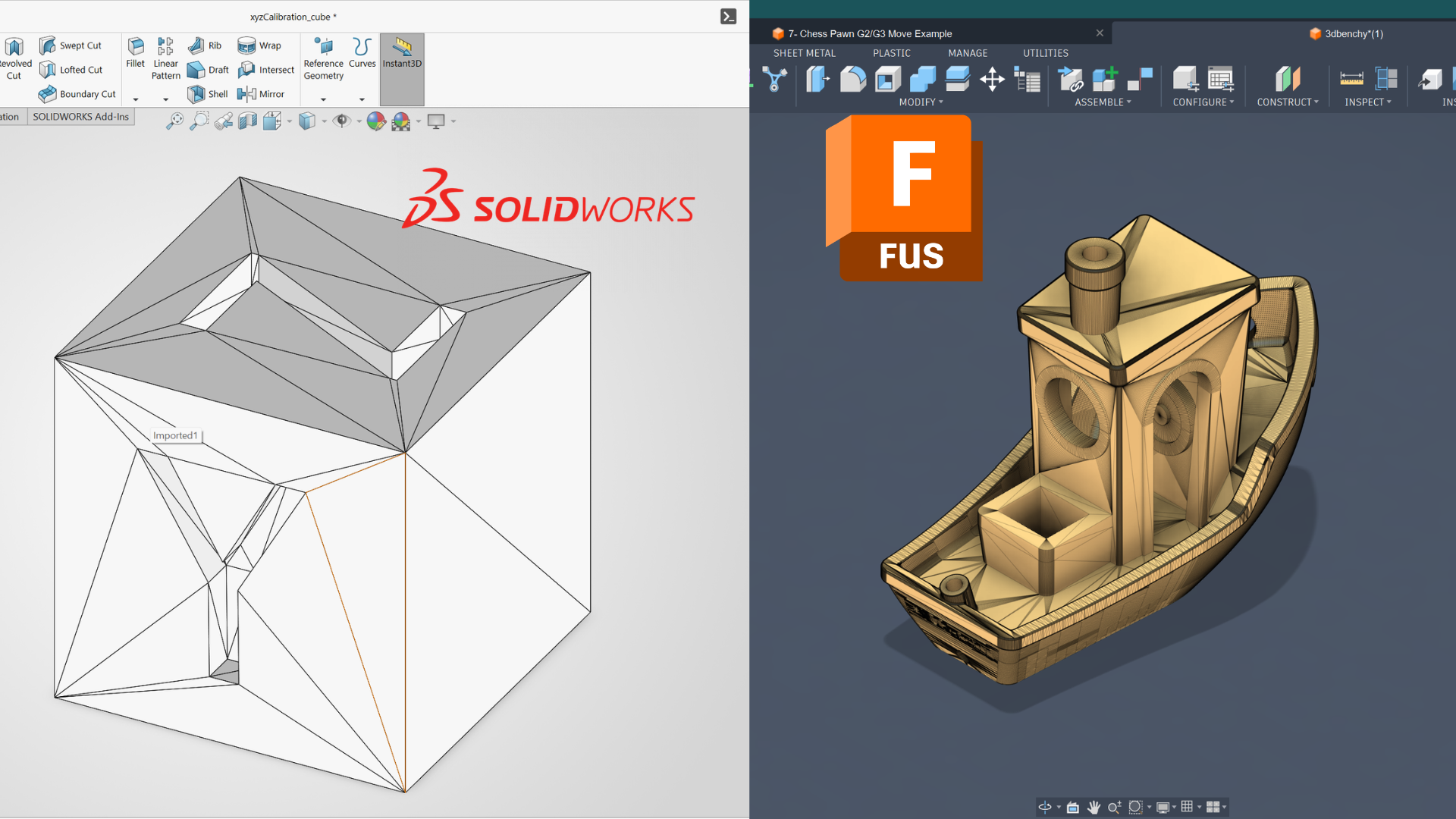
Instead of a vague “it depends,” here are concrete recommendations based on common situations.
You’re an engineering student preparing for industry
Go with SolidWorks. More companies use it, more job postings list it, and the skills transfer directly to other professional CAD tools.
Most universities offer student licenses.
If you want to build a strong foundation, SourceCAD’s SolidWorks courses will get you there faster than scattered YouTube tutorials.
You’re a hobbyist or maker with a 3D printer
Fusion 360 is the better fit.
The free personal license covers everything you need, the learning curve is gentler, and it runs on whatever hardware you have; including a Mac.
There are also other free 3D modeling tools if you want to explore before committing.
You’re a small business or startup
Fusion 360 makes more financial sense for most small teams.
The built-in CAM, cloud collaboration, and lower subscription cost reduce both software expenses and workflow friction.
You can always move to SolidWorks later if your needs outgrow what Fusion offers.
You work at an established engineering company
Use whatever your employer provides.
This sounds obvious, but it’s the honest answer.
If they’re on SolidWorks, learn SolidWorks.
If they’re on Fusion, learn Fusion.
Fighting the established toolchain rarely ends well.
You run a CNC shop or do machining
A lot of shops use both.
SolidWorks (or another professional CAD tool) for the design work, and Fusion for CAM.
Fusion’s integrated toolpath generation is hard to beat at that price point.
You’re a freelancer or consultant
It depends on your clients.
If you serve engineering firms or manufacturers, SolidWorks is what they’ll expect.
If you’re doing independent product design or working with startups, Fusion gives you more flexibility at a lower cost.
Can You Learn Both?
If you’re wondering whether it’s worth learning one or several CAD programs, the short answer is, YES.
Yes, and it’s easier than you might think.
Both programs are built on parametric modeling.
The core concepts (sketches, constraints, extrudes, revolves, patterns, assemblies) are essentially the same.
The buttons are in different places and some features have different names, but the underlying logic is identical.
I have personally used SolidWorks during my engineering days and have found the knowledge to be easily transferable to Fusion 360.
And same as the case with many of my peers.
In my experience most people who are proficient in one software can get comfortable in the other within a couple of weeks or at a max a month.
The real skill for you to develop isn’t knowing where the fillet button is.
It’s understanding how to build models that are easy to modify, how to structure assemblies, and how to communicate your design through proper drawings and documentation.
That skill set is software-agnostic.
How to Get Started
SolidWorks access
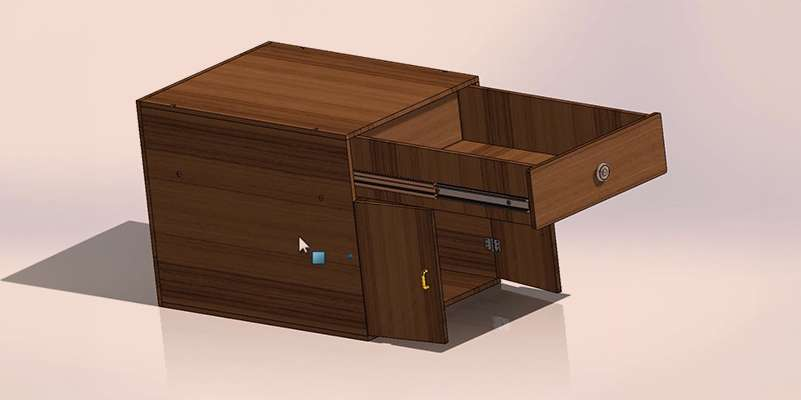
Student licenses are available through most universities for around $60 per year.
The SolidWorks for Makers edition costs about $48 per year and gives you the full desktop version for non-commercial use (it runs through the 3DExperience platform).
Some organizations like the EAA (Experimental Aircraft Association) also offer access through membership.
For structured learning, SourceCAD has SolidWorks courses that take you from complete beginner through assemblies and drawings.
Fusion 360 access
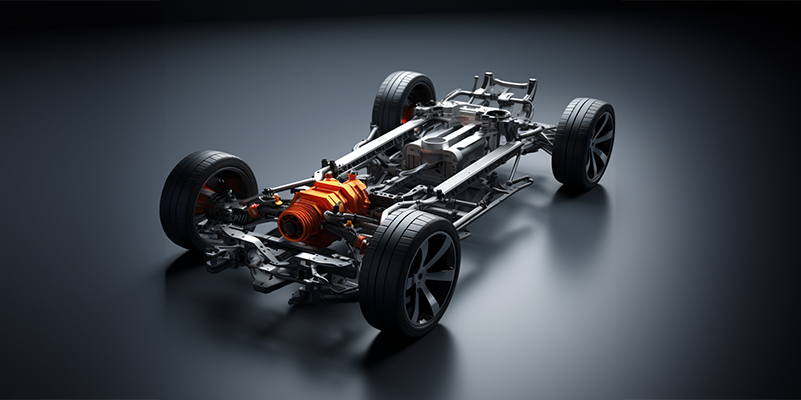
The personal license is free for non-commercial use with a revenue cap under $1,000 per year.
Education licenses are available for students and educators.
The commercial subscription runs about $680 per year.
SourceCAD also has Fusion 360 courses covering everything from sketching basics to assemblies, rendering, and animation.
Frequently Asked Questions
Can Fusion 360 replace SolidWorks?
Fusion 360 can replace SolidWorks in some workflows.
If you’re doing product design, prototyping, or CNC work at a small to medium scale, Fusion can handle it.
But for large assemblies, advanced simulation, or detailed manufacturing drawings, SolidWorks is still the stronger option.
Is Fusion 360 good enough for professional work?
First define what “professional” means to you.
Plenty of real businesses ship products designed entirely in Fusion.
Small manufacturing companies, product design studios, and CNC shops use it daily.
But you’re unlikely to see it at a large automotive OEM or aerospace contractor.
Those environments typically run SolidWorks, CATIA, NX, or Creo.
Can I open SolidWorks files in Fusion 360?
Yes. Fusion can import .sldprt and .sldasm files.
The geometry comes through, but complex features and design history may not translate perfectly.
For sharing between the two, exporting as .STEP is the most reliable option.
Is SolidWorks worth the cost?
If your career depends on it or your employer provides it, absolutely.
For personal or hobby use, the Makers edition at $48 per year is a reasonable option.
But if you’re just getting started with CAD and paying out of pocket, Fusion’s free license is hard to argue against.
Which one has better learning resources?
Both have extensive resources.
Fusion has a larger volume of free YouTube content, especially for 3D printing and hobbyist workflows.
SolidWorks has more structured professional training, university programs, and certification paths (CSWA, CSWP).
For either program, a well-organized course will get you productive much faster than searching for tutorials one topic at a time.
Do skills transfer between SolidWorks and Fusion?
Absolutely.
The core concepts of parametric modeling, sketch constraints, feature-based design, and assembly management are the same.
Most users who learn one can adapt to the other quickly.
The transition is more about learning a new interface than learning new concepts.
Wrapping Up
SolidWorks and Fusion 360 aren’t interchangeable, but they’re not as far apart as the debates make them seem either.
SolidWorks is the stronger tool for professional engineering, large assemblies, and manufacturing documentation.
Fusion is the more accessible and affordable option for product design, CNC work, and getting started with parametric modeling.
Let what you actually need to do drive the choice.
If you’re still figuring out your direction, SourceCAD’s learning paths lay out structured routes for both SolidWorks and Fusion 360 depending on where you want to go.