Best laptops for Solidworks Our top 10 pick of 2025
When selecting the best laptops for Solidworks you should heavily base your choice on the CPU speed and its architecture as Solidworks is mostly single-threaded software. For Solidworks a faster CPU speed will make more impact than other peripherals. Recommending a system specification for Solidworks is not quite straightforward as the hardware configuration will vary [ ]
When selecting the best laptops for Solidworks you should heavily base your choice on the CPU speed and its architecture as Solidworks is mostly single-threaded software.
For Solidworks a faster CPU speed will make more impact than other peripherals.
Recommending a system specification for Solidworks is not quite straightforward as the hardware configuration will vary based on your workflow.
As an example higher CPU single-core speed is preferred for 3D modeling and for rendering and simulation, multicore performance is required.
For large assemblies and rendering GPU performance will make a massive impact.
So, you should select your Solidworks laptop based on the work you will mostly do.
You should also avoid selecting a very high-end CPU but basic RAM, GPU, Hard disk and other peripherals as typically the slowest performing hardware may dictate the overall system speed.
Simply put, if you have a high-end CPU but other peripherals are not delivering data fast enough to the CPU for processing then it’s idle most of the time impacting the performance.
So, a holistic approach is needed when selecting the best Laptop for Solidworks whether you want it for learning Solidworks or working with it.
So, with that in mind let’s start with the technical specifications of hardware that will work best with Solidworks.
If you don’t want to check the hardware recommendation and want to see the list of laptops directly then you can find it here.
If you prefer, here is the video version of this article as well.
Processor
Solidworks is predominantly a single-threaded application and runs on one core.
So, you should always look for higher clock speed and better CPU architecture that ensures higher single-core performance.

On the other hand, if your work involves rendering and simulation then it will benefit greatly with the multicore configuration.
So, select at least a 4-core processor with 8 being the sweet spot for most cases and anything beyond 12-core is not going to make a big impact on performance.
The multicore processor will also help you have enough room for other software that will run on your laptop leaving enough room for Solidworks.
I would recommend you go with at least 3.1 GHZ speed for the CPU with faster the better.
Also, look for the size and type of cache memory available on the CPU.
It is a type of memory that is usually available directly on the CPU (sometimes on the motherboard too) which makes accessing data very fast compared to a typical RAM.
When comparing CPUs if the specs are almost identical then you can select the one with higher cache memory.
You can also overclock your CPU to gain that extra speed but not all CPUs support overclocking.
As an example, the Intel i7 8700K can be overclocked and Intel Core i7 12800H can’t be overclocked.
Here check for K or X suffix in the CPU name these are the CPUs that support overclocking.
Xeon processors don’t support overclocking and all AMD processors support overclocking.
Just a word of caution, when using overclocking make sure you have a proper cooling system installed for your PC or laptop else you will soon run into blue dumps and other crashes.
Memory
RAM sticks are quite inexpensive these days and they have a massive impact on the performance of your system.

So, if you don’t want to create a bottleneck in the performance then go with at least 8 GB of RAM with recommended 16 GB or more.
If you work with larger data sets like assemblies with limited RAM, then Solidworks may end up using your hard disk as temporary RAM and that will take a hit on performance.
Beyond a certain point more RAM may not improve the speed as once you reach a threshold where you have sufficient RAM for your workflow adding more to the board will not make much of a difference.
But it is still better to have more breathing space for occasional high-performance work and if you can get it then going up to 32 or even 64 GB of RAM won’t do any harm.
You should also look at the RAM speed and go with the one with a higher speed. RAM speed is usually mentioned in MHz and with higher speed the chances of creating a bottleneck are less.
3200MHz should be the minimum for the RAM speed with the higher the better.
Another factor to consider is the CAS number of the RAM which is the latency of data.
Here go with the lower number as lower latency means higher data access speed.
Graphics Card (GPU)
If you are working with larger assemblies, complex simulations or renderings then this can have a significant impact on the performance of Solidworks.

But first let’s make one thing clear, gaming graphics cards are not best for Solidworks as they are made for a completely different kind of environment where you need a higher frame rate for not-so-detailed models.
On the other hand, in Solidworks, the models, and assemblies are detailed with high polygon count, and you need a high frame rate to view these models.
Some gaming graphics cards that support Direct X will work well to some extent with Solidworks, but they are still not recommended.
If you want to take full advantage of graphics card performance, then go with the one that supports Open GL.
Nvidia Quadro RTX and AMD Radeon Pro are the recommended graphics cards for Solidworks.
A modest vRAM will do just fine for smaller datasets but for larger assemblies look for graphics with 4 GB or more of vRAM.
If you are using Solidworks 2019 or higher you will see a massive improvement in performance with the use of better graphics cards as Solidworks introduced an enhanced Graphics performance option in the 2019 version.
Another thing to note here is that Solidworks doesn’t use multiple GPUs so don’t invest in more than one GPU for a workstation.
So, the best bet here is the certified graphics from Solidworks that are optimized for performance.
Also look for graphics cards with higher vRAM especially if you are working with larger assemblies, and renderings containing complex textures.
So, a graphics card with a minimum of 4GB of vRAM is recommended with at least 8GB for larger assemblies and complex simulations or renderings.
Hard Drive
This is the hardware that is quite overlooked but it has the potential of creating a real bottleneck in Solidworks performance.

My clear recommendation here is this, steer away from hard disks at all costs and always go with an SSD.
These are the faster and lightweight alternatives that improve data access speed significantly.
Hard disks can be used for storing data for the long term but when it comes to operating system it should be installed on SSD.
If possible, go with PCIe M.2 NVMe SSD as they are faster than their SATA counterparts.
Have at least 512 GB of SSD for operating system and Solidworks and you can install hard disks for storing data for the long term.
Operating System
Windows 10 and 11 are recommended for Solidworks and you can’t run it on Mac as it’s unsupported.
There are some workarounds to run it on Mac but that will significantly impact the performance and is not worth the hassle.
Now based on the hardware recommendations presented above here is our selected list of 10 best laptops for Solidworks that meet all the essential technical requirements.
HP ZBook Power G9

|
Component |
Specification |
|---|---|
|
Processor |
Intel Core i7 12th Gen i7-12800H, 14 cores 20 threads, 4.8 GHz Max Turbo Frequency |
|
Memory |
16 GB DDR4-3200 MHz |
|
Storage |
512 GB M.2 NVMe PCIe SSD |
|
Graphics |
NVIDIA Quadro T600, 4 GB GDDR6 |
|
Screen |
15.6 inch |
|
Operating system |
Windows 10 Pro |
|
Recommended for |
Small to medium-size 3D modeling, medium-size assemblies, medium simulations and renderings |
Lenovo ThinkPad P16
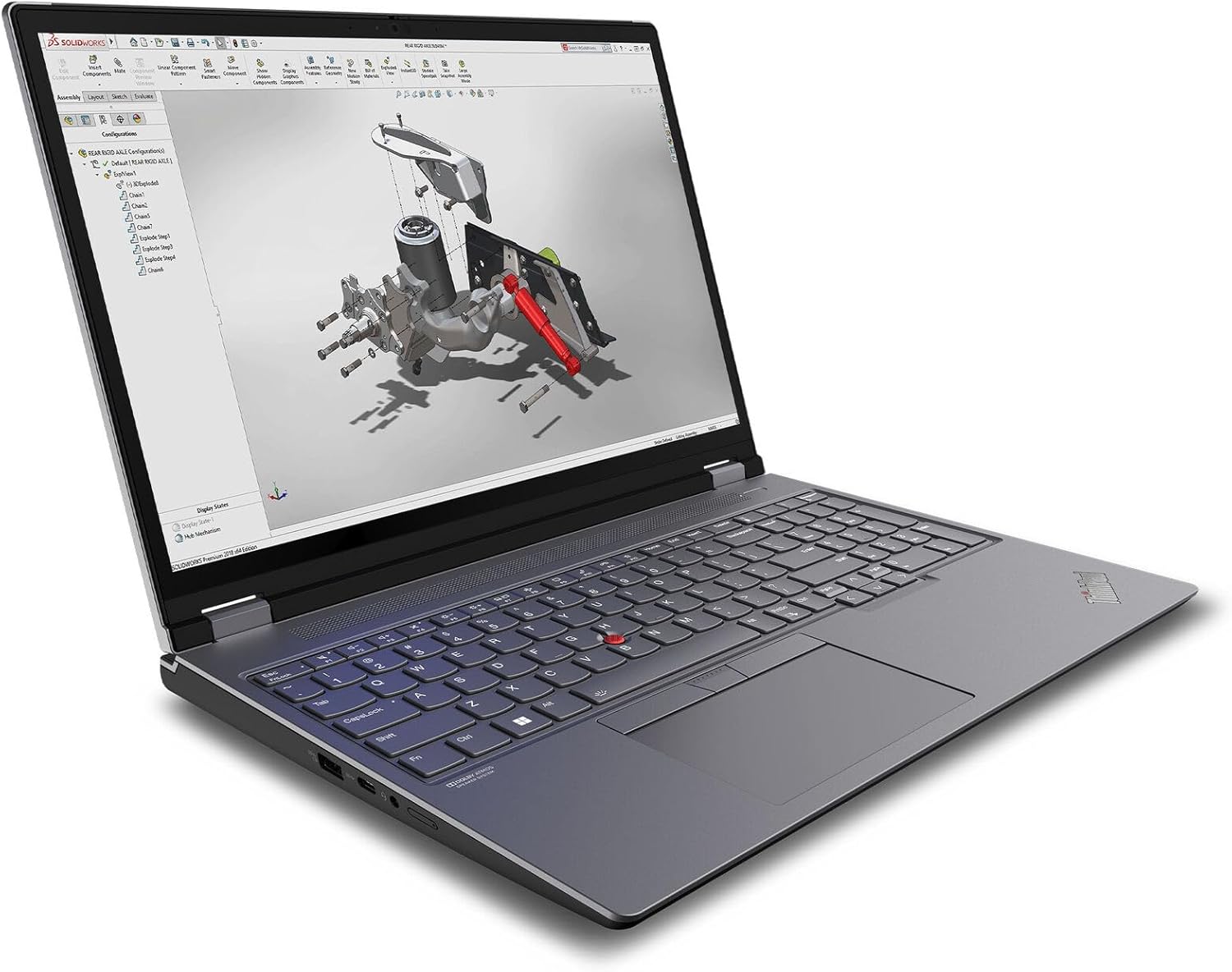
|
Component |
Specification |
|---|---|
|
Processor |
Intel Core i7-14700HX, 20 core 28 threads, 5.5 GHz Max Turbo Frequency |
|
Memory |
32 GB DDR5-4800MHz |
|
Storage |
2 TB PCIe NVMe, TLC M.2 SSD |
|
Graphics |
NVIDIA RTX 1000 ADA, 6GB GDDR6 |
|
Screen |
16 inch |
|
Operating system |
Windows 11 Pro |
|
Recommended for |
3D modeling, Small to medium-sized assemblies, medium-sized Renderings and Simulations |
Dell Precision 7000 workstation

|
Component |
Specification |
|---|---|
|
Processor |
Core i7-12850HX, 16 core 24 threads, 4.80 GHz Max Turbo Frequency |
|
Memory |
64 GB DDR5-4800 MHz |
|
Storage |
1 TB PCIe NVMe, TLC M.2 SSD |
|
Graphics |
Nvidia RTX A3000, GDDR6 12 GB |
|
Screen |
15.6 inch |
|
Operating system |
Windows 11 Pro |
|
Recommended for |
Small to large size 3D modeling, medium to large assemblies, complex simulations and renderings |
ASUS ProArt StudioBook

|
Component |
Specification |
|---|---|
|
Processor |
Intel Core i7-9750H, 4.50 Max Turbo Frequency, 6 cores and 12 threads |
|
Memory |
16 GB DDR4-3200MHz, Expandable up to 64GB DDR4 |
|
Storage |
1 TB M.2 NVMe PCIe 3.0 SSD |
|
Graphics |
NVIDIA Quadro RTX 3000, 6GB GDDR6 VRAM |
|
Screen |
16 inch |
|
Operating system |
Windows 10 Pro |
|
Recommended for |
3D modeling, Small to medium-sized assemblies, medium-sized Renderings and Simulations |
HP ZBook Studio

|
Component |
Specification |
|---|---|
|
Processor |
Intel Core i7 12th Gen i7-12800H, 4.80 GHz Max Turbo Frequency, 14 cores and 20 threads |
|
Memory |
32GB DDR5-4800MHz |
|
Storage |
1 TB M.2 NVMe PCIe 3.0 SSD |
|
Graphics |
NVIDIA RTX A2000 with 8GB GDDR6 memory |
|
Screen |
15.6 inch |
|
Operating system |
Windows 11 Pro |
|
Recommended for |
Small to large size 3D modeling, medium to large assemblies, complex simulations and renderings |
MSI Stealth 16 Studio
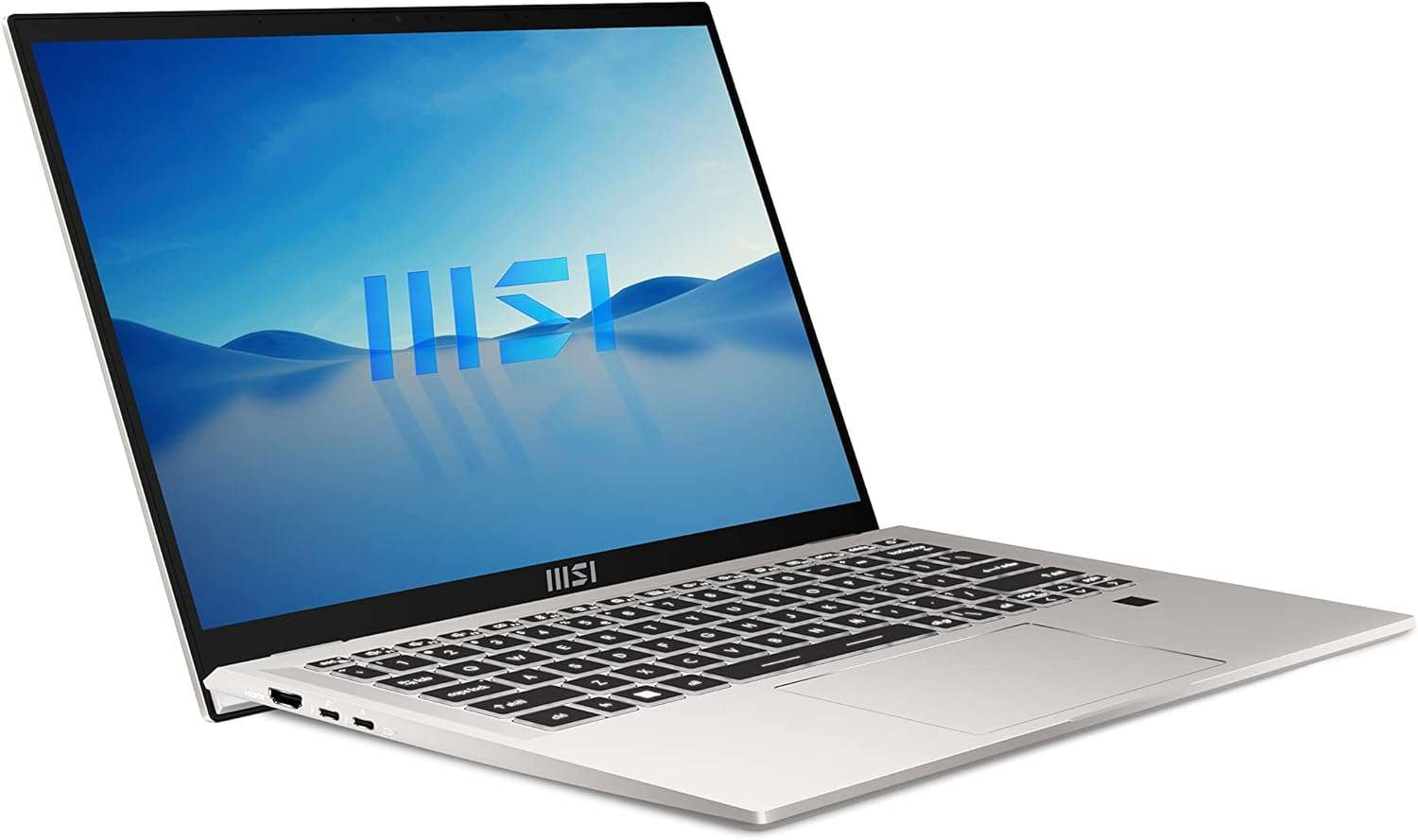
|
Component |
Specification |
|---|---|
|
Processor |
Intel Core Ultra 9 185H, 16 cores 22 threads, 5.1 GHz Max Turbo Frequency |
|
Memory |
64 GB DDR5-4600 MHz |
|
Storage |
2 TB M.2 NVMe PCIe SSD |
|
Graphics |
NVIDIA GeForce RTX 4070 8GB GDDR6 |
|
Screen |
16 inch |
|
Operating system |
Windows 11 Pro |
|
Recommended for |
3D modeling, Small to medium-sized assemblies, medium-sized Renderings and Simulations |
Lenovo ThinkPad P16s

|
Component |
Specification |
|---|---|
|
Processor |
AMD Ryzen 7 PRO 7840U, 8 core 16 threads, 5.1 GHz Max Boost Clock Speed |
|
Memory |
64 GB DDR5-4600MHz |
|
Storage |
1 TB M.2 NVMe PCIe SSD |
|
Graphics |
Radeon 780M Graphics |
|
Screen |
16 inch |
|
Operating system |
Windows 11 Pro |
|
Recommended for |
3D modeling, Small to medium-sized assemblies, medium-sized Renderings and Simulations |
ASUS V16
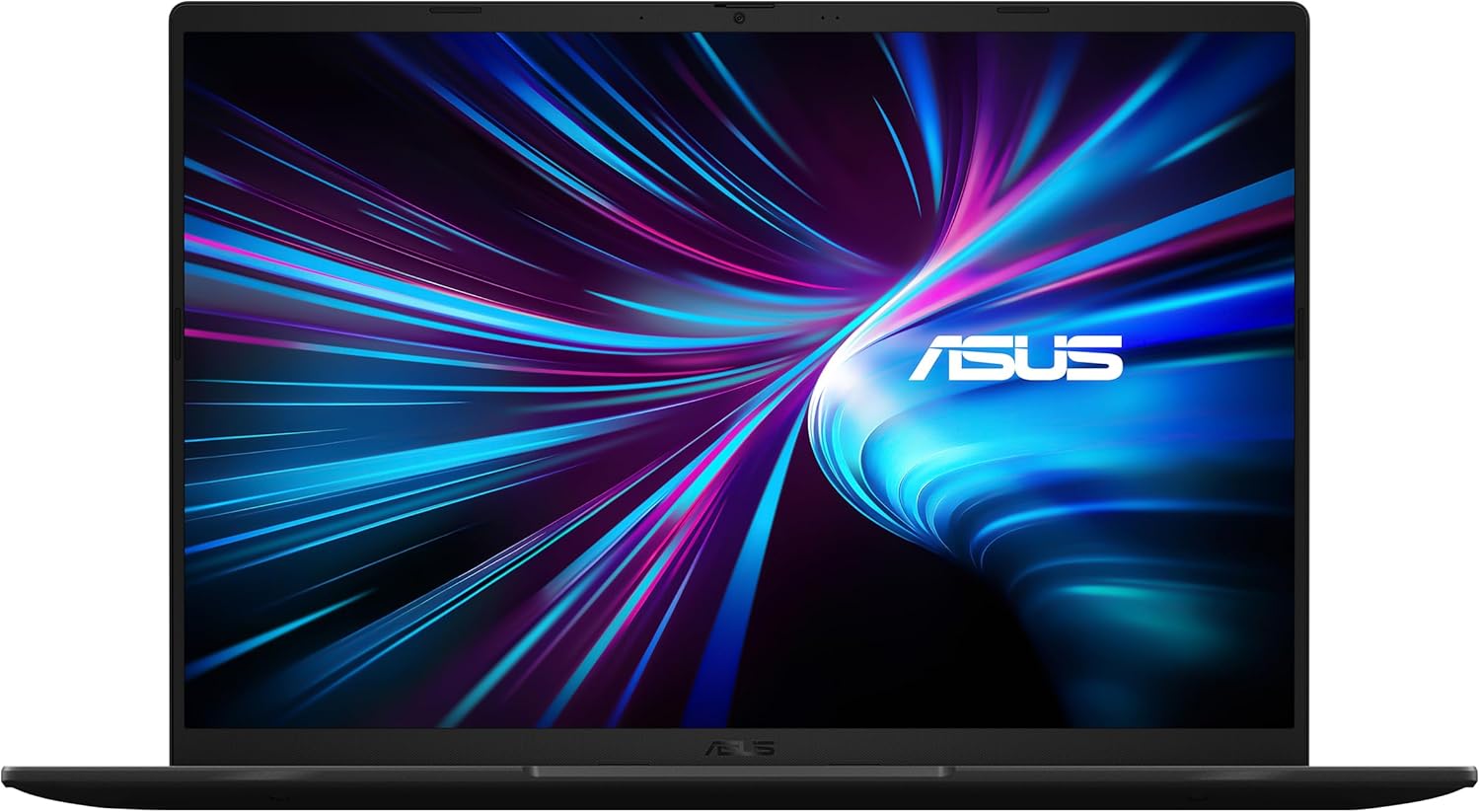
|
Component |
Specification |
|---|---|
|
Processor |
Intel Core 7, 10 cores 16 threads, 2.5 GHz base clock speed and 5.2 GHz max turbo boost |
|
Memory |
32 GB DDR5-4800MHz |
|
Storage |
1 TB M.2 NVMe PCIe SSD |
|
Graphics |
NVIDIA GeForce RTX 5060 |
|
Screen |
16 inch |
|
Operating system |
Windows 11 Home |
|
Recommended for |
3D modeling, Small to medium-sized assemblies, medium-sized Renderings and Simulations |
MSI Stealth GS77

|
Component |
Specification |
|---|---|
|
Processor |
Intel Core i7-12700H, 14 cores 20 threads, 4.7 GHz Max Turbo Frequency |
|
Memory |
16 GB DDR5-4800MHz |
|
Storage |
1 TB M.2 NVMe PCIe SSD |
|
Graphics |
NVIDIA GeForce RTX 3060 GPU, 6 GB |
|
Screen |
17.3 inch |
|
Operating system |
Windows 11 Home |
|
Recommended for |
Small to large size 3D modeling, medium to large assemblies, complex simulations and renderings |
Lenovo ThinkPad P17

|
Component |
Specification |
|---|---|
|
Processor |
Intel Core i7-10750H, 6 cores 12 threads,5.0 GHz Max Turbo Frequency |
|
Memory |
32 GB DDR4-3200MHz |
|
Storage |
1 TB M.2 NVMe PCIe |
|
Graphics |
NVIDIA Quadro T2000, 4 GB |
|
Screen |
17.3 inch |
|
Operating system |
Windows 10 Pro |
|
Recommended for |
Small to large size 3D modeling, medium to large assemblies, complex simulations and renderings |
Some frequently asked questions
Now, let’s answer some of the questions that our users frequently ask related to these laptop recommendations.
What is the minimum system requirement to run Solidworks?
When it comes to running Solidworks it can run easily on a modest system with basic configuration.
But it’s going to work only if you are making small-part drawings and not working with complex drawings or assemblies.
Larger the complexity of your work more processing power is required.
But when it comes to the minimum requirement to run Solidworks here it is in the following table.
|
Component |
Specification |
|---|---|
|
Processor |
Intel or AMD entry-level processors |
|
Memory |
Minimum 8 GB (16 GB recommended) |
|
Storage |
SSD Recommended |
|
Display |
1920 x 1080 |
|
Operating system |
64 Bit Windows 10 or 11 |
What is the best laptop to run Solidworks?
If budget allows, HP ZBook Studio will be the best among all the laptops recommended in this article for Solidworks as it provides the best overall hardware specifications with a fast Processor, SSD, RAM and graphics.
If you are on a budget then HP ZBook power G9 should be your choice of best laptop for Solidworks as it has the best hardware in a moderate budget segment.
Are gaming laptops good for Solidworks?
Gaming laptops are NOT recommended for Solidworks as they tend to work well for low poly high frame rate environments but Solidworks is different, here the parts and assemblies are high poly and a low frame rate is required.
Also, it’s better if you get laptops with Dassault system certified graphics cards.
Should I select more cores or a higher clock speed in a processor?
Solidworks mostly runs single-threaded operations and it needs multiple cores for Rendering and simulation.
So, it is recommended that you incline towards a higher clock speed rather than more cores or threads.
Summary
A laptop recommended for other generic CAD software may not work well for Solidworks as the best laptop for AutoCAD or other cad software may end up performing quite mediocre for Solidworks because of the way it performs tasks.
So, decide the best laptop for you based on the type of work you primarily do with Solidworks.
Do you agree with our list of best laptops for Solidworks?
Which laptop you are using for Solidworks? Let us know in the comments below.